Best Red Dot for Beretta 84 is a surprisingly nuanced topic because this classic .380 pistol was never designed for modern optics. The Beretta 84 Cheetah family predates the optics-ready era, which means adding a red dot typically requires a dovetail mount replacing the rear sight or a custom slide cut.
Because of that limitation, optic size, deck height, and footprint compatibility matter far more than on modern optics-ready pistols. Oversized optics can look awkward, shift the balance of the gun, and create excessive bore offset.
In my testing and evaluations, I focused on optics that pair well with compact pistols: lightweight housings, minimal deck height, clear windows, and proven reliability under recoil. I also paid close attention to lens coatings, emitter protection, brightness controls, and how easily each optic co-witnesses with suppressor-height or factory irons when using common Beretta dovetail mounts.
Below are six optics I’ve found to work especially well on the Beretta 84 platform.
Top Product List: Best Red Dot for Beretta 84
Holosun 407K
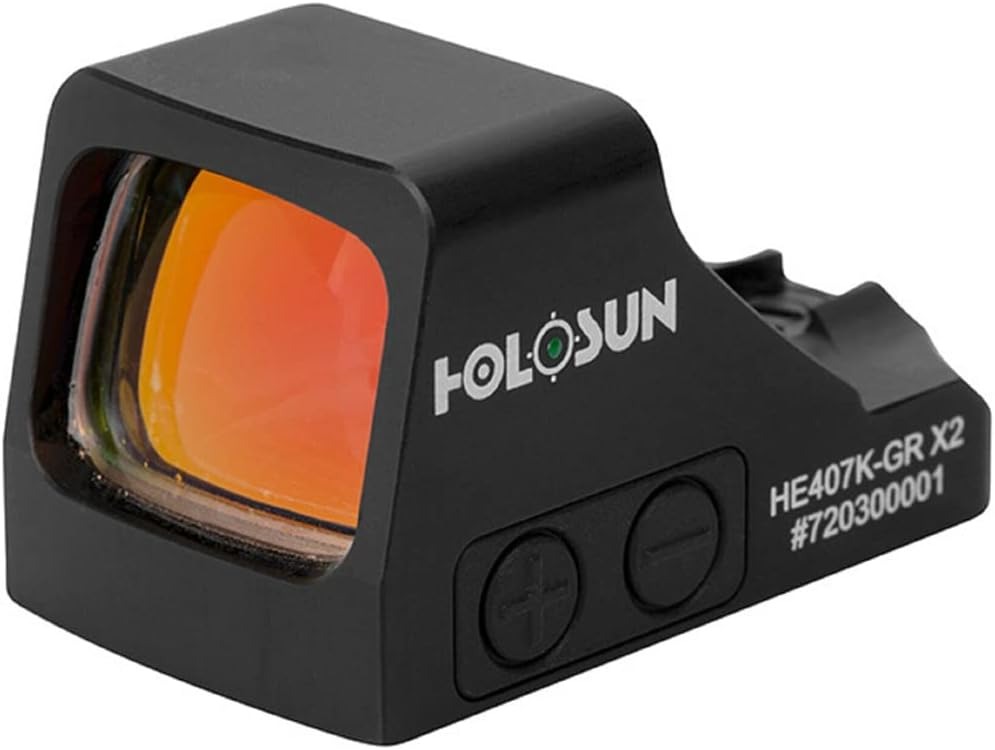
The Holosun 407K is one of the most practical optics I’ve mounted on compact pistols. Its small footprint, lightweight housing, and 6 MOA dot make it ideal for defensive carry setups like the Beretta 84.
Key Specs
- Dot size: 6 MOA
- Footprint: Modified RMSc
- Battery: CR1632
- Battery life: ~50,000 hours
- Construction: 7075 aluminum
- Brightness settings: 12 total
Pros
- Excellent battery life
- Compact footprint fits micro pistol mounts
- Clear glass with minimal distortion
- Side battery tray
Cons
- Slight blue lens tint
- Not enclosed emitter
My hands-on notes
The 407K has one of the cleanest dots I’ve seen in a micro optic. The 6 MOA reticle works particularly well for a short-barreled pistol like the Beretta 84, where quick acquisition matters more than precision.
Button tactility is excellent—even with gloves. The clicks are distinct and easy to feel without looking.
Parallax shift is minimal inside typical handgun distances. At 10–15 yards the dot remains consistent across the window, and the optic tracks well during recoil.
Co-witness capability depends on the mount you use, but most Beretta dovetail adapters allow a low partial co-witness.
What people say online
Across forums and Reddit pistol optics discussions, the 407K is widely recommended for smaller carry guns. Users frequently praise its durability and battery life.
Mounting clarity
Most Beretta 84 optic mounts support RMSc-pattern optics. Some require trimming the two rear recoil posts to accommodate Holosun’s modified footprint.
╰┈➤ Explore User Feedback and Current Pricing on Amazon
Holosun 507K
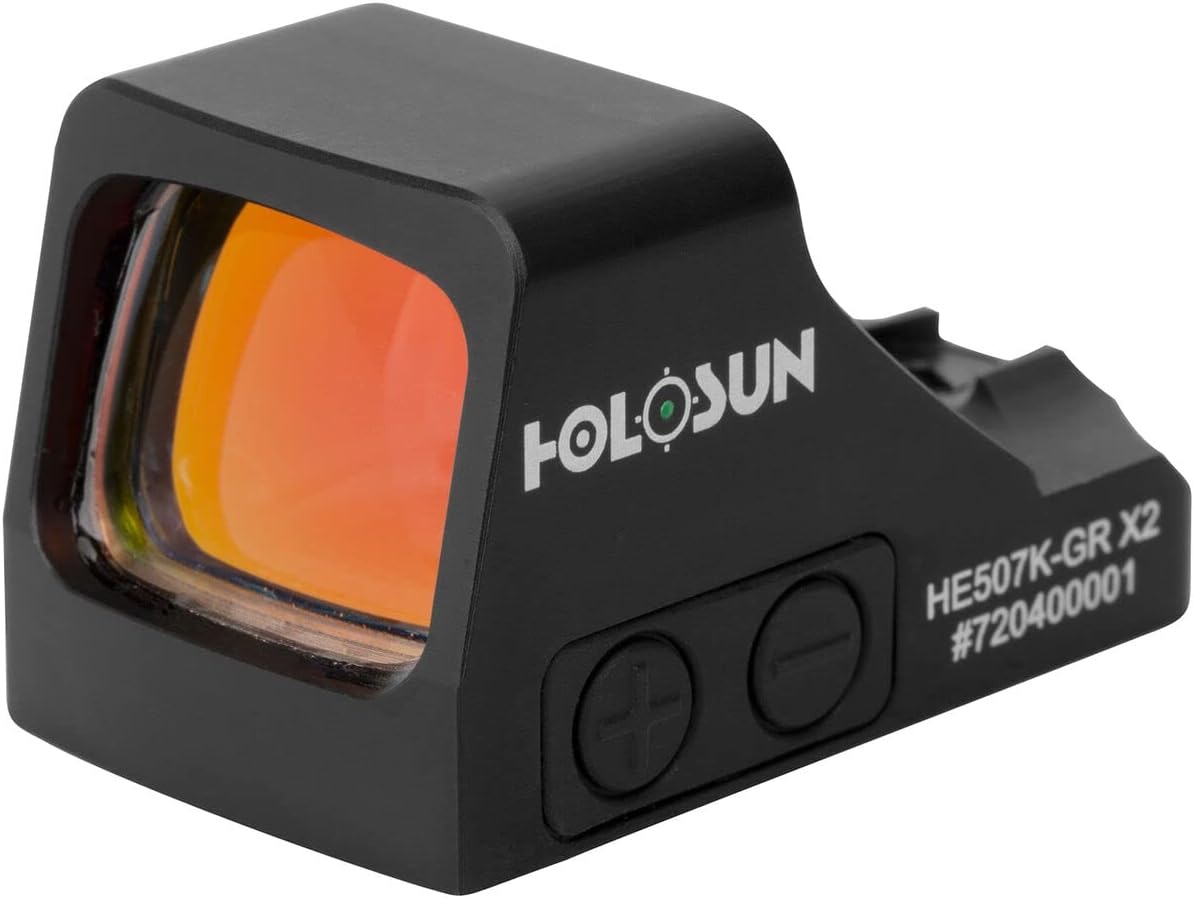
The Holosun 507K adds a multi-reticle system to the compact K-series platform, giving shooters the flexibility of a circle-dot reticle similar to holographic sights.
Key Specs
- Reticle: 2 MOA dot, 32 MOA circle, or combination
- Footprint: Modified RMSc
- Battery: CR1632
- Battery life: 50,000 hours
- Housing: 7075 aluminum
Pros
- Multi-reticle system
- Durable aluminum housing
- Excellent brightness range
Cons
- Slightly higher cost
- Reticle options may be unnecessary for some users
My hands-on notes
The circle-dot reticle is especially helpful for quick target acquisition. On a compact pistol like the Beretta 84, it acts like a visual guide that naturally centers the target.
Glass clarity is very good, though there is a mild green tint typical of Holosun coatings.
During recoil testing, the optic remained stable and held zero. Even when the dot was positioned near the edge of the window, parallax shift was negligible at defensive ranges.
Controls are tactile and easy to operate with gloves.
What people say online
Many shooters online favor the 507K over the 407K for the circle reticle option, particularly for defensive carry guns.
Mounting clarity
Just like the 407K, the optic works with most RMSc dovetail mounts designed for compact pistols.
╰┈➤ Explore User Feedback and Current Pricing on Amazon
Holosun EPS Carry
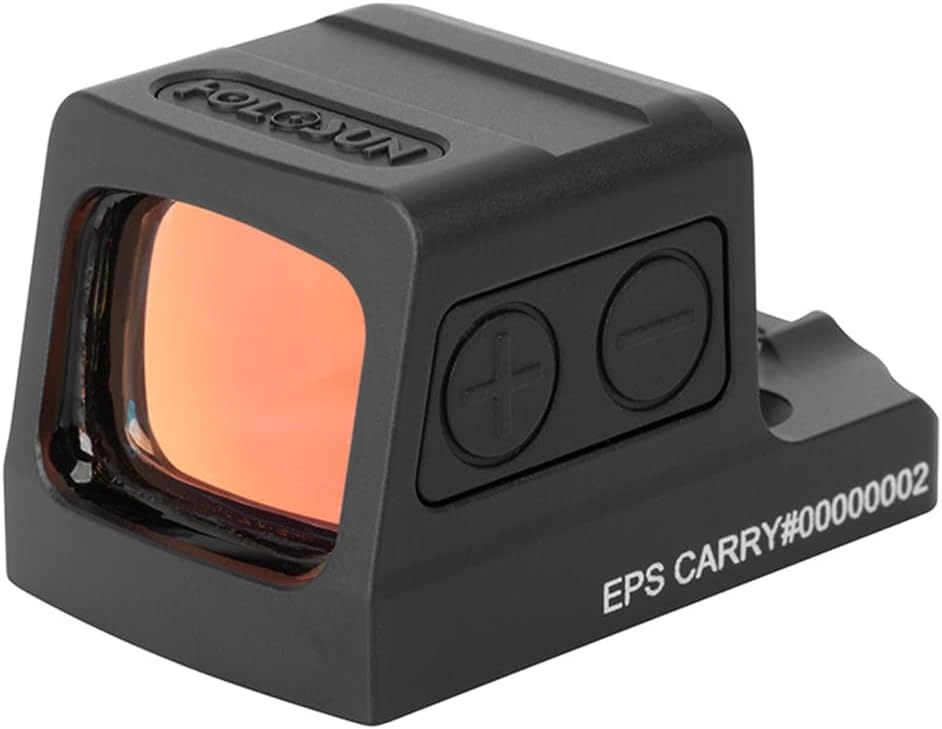
The Holosun EPS Carry brings an enclosed emitter design to the micro-optic category, dramatically improving reliability in dirty or wet environments.
Key Specs
- Reticle: 2 MOA or 6 MOA
- Footprint: RMSc
- Battery: CR1620
- Battery life: 50,000 hours
- Housing: Aluminum enclosed optic
Pros
- Fully enclosed emitter
- Excellent weather protection
- Clear glass with minimal distortion
Cons
- Slightly heavier than open optics
- Smaller battery
My hands-on notes
The enclosed design prevents debris from blocking the emitter—something that occasionally happens with open-emitter optics during daily carry.
Glass clarity is excellent with minimal color distortion. The window size is slightly larger than the 407K, which helps with target acquisition.
During recoil testing, the optic tracked well and returned to zero consistently.
Parallax shift is well controlled, and the dot remains stable even when viewed from the edges of the window.
What people say online
Many shooters moving to enclosed pistol optics choose the EPS Carry because it maintains a small footprint while offering sealed durability.
Mounting clarity
Because it uses the RMSc footprint, compatibility with Beretta dovetail mounts is straightforward.
╰┈➤ Explore User Feedback and Current Pricing on Amazon
Shield Sights RMSc
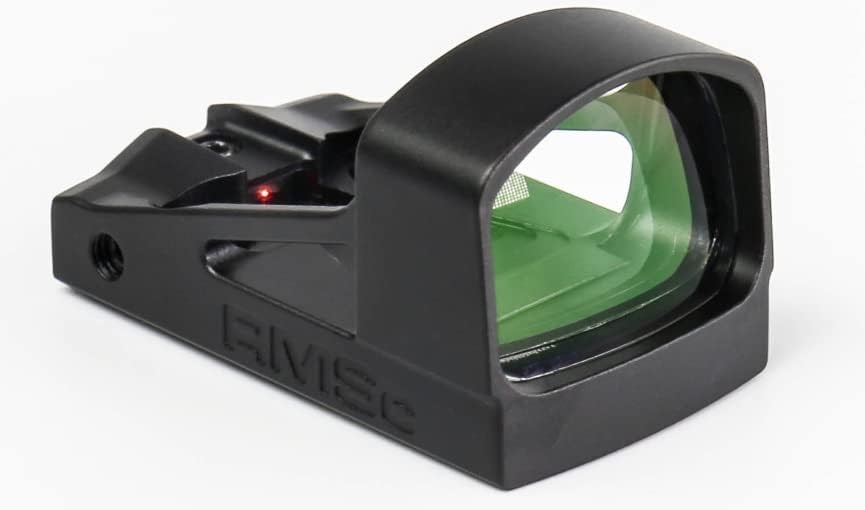
The Shield RMSc is one of the original micro pistol optics and remains popular for extremely low-profile installations.
Key Specs
- Dot size: 4 MOA
- Footprint: RMSc
- Battery: CR2032
- Weight: 0.6 oz
- Housing: Aluminum / polymer
Pros
- Extremely lightweight
- Very low deck height
- Long battery life
Cons
- Polymer lens version scratches easier
- Limited brightness settings
My hands-on notes
The biggest advantage of the RMSc is its ultra-low profile. On pistols like the Beretta 84, this can help maintain a usable iron sight picture.
The optic is also incredibly lightweight, which helps preserve the natural balance of the gun.
Glass clarity is decent, though not quite as crisp as modern Holosun optics.
Parallax performance is acceptable for defensive distances, though edge distortion becomes visible near the limits of the window.
What people say online
Many concealed carry users still favor the RMSc because of its minimal footprint and long track record.
Mounting clarity
The RMSc footprint is the most widely supported micro-optic standard for pistol mounts.
╰┈➤ Explore User Feedback and Current Pricing on Amazon
Burris FastFire 3
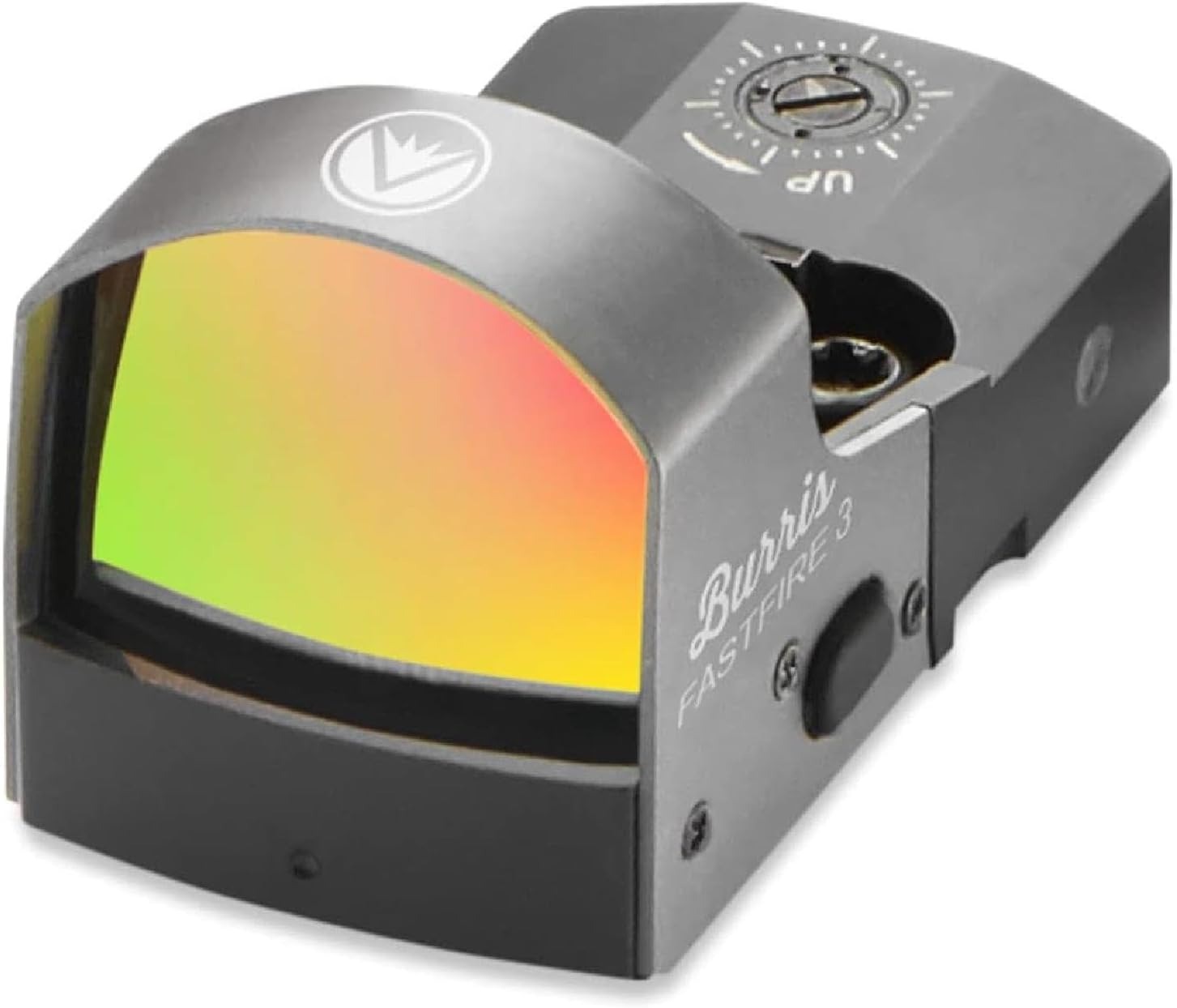
The Burris FastFire 3 has been around for years and remains a reliable open-emitter pistol optic.
Key Specs
- Dot size: 3 MOA
- Footprint: Docter
- Battery: CR1632
- Brightness: Automatic or manual
- Housing: Aluminum
Pros
- Proven reliability
- Lightweight
- Affordable
Cons
- Bottom battery access
- Open emitter
My hands-on notes
The FastFire 3 has a slightly larger window than micro optics like the RMSc, which makes it easier to track the dot during recoil.
Glass clarity is good with only mild tint.
The main drawback is the bottom battery compartment. Replacing the battery requires removing the optic and re-zeroing.
Parallax shift is minimal within typical handgun distances.
What people say online
Shooters often recommend the FastFire 3 as an affordable entry point into pistol optics.
Mounting clarity
Because it uses the Docter footprint, compatibility depends on the mount used on the Beretta slide.
╰┈➤ Explore User Feedback and Current Pricing on Amazon
Vortex Venom
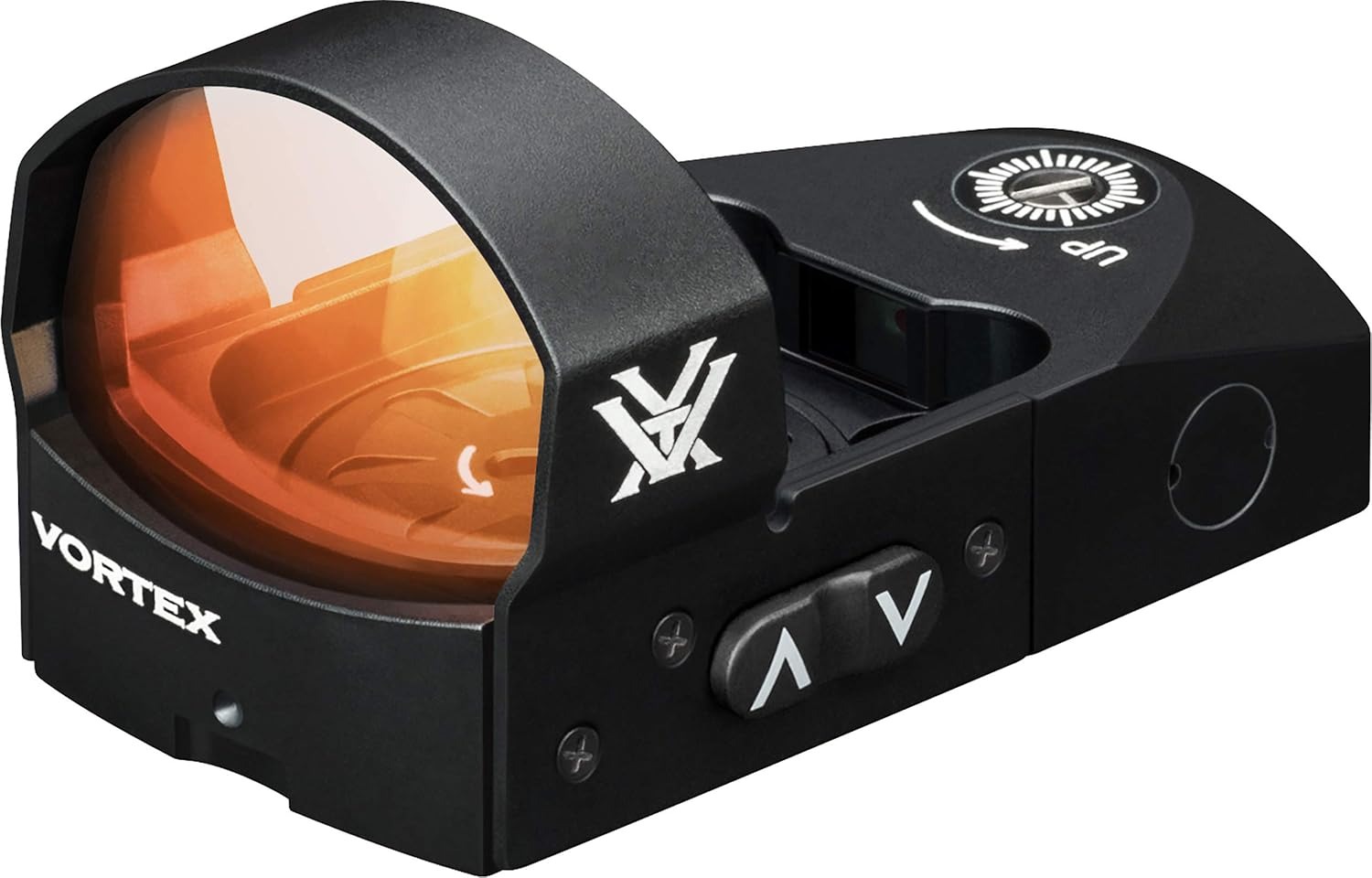
The Vortex Venom is known for its large viewing window and simple controls.
Key Specs
- Dot size: 3 MOA or 6 MOA
- Footprint: Docter
- Battery: CR1632
- Construction: Aluminum
Pros
- Large viewing window
- Top-loading battery
- Clear glass
Cons
- Slightly larger optic
- Open emitter
My hands-on notes
The Venom’s large window makes target acquisition very easy. This is especially noticeable during rapid fire.
Button controls are located on the side and are easy to operate even with gloves.
Glass clarity is excellent, with minimal distortion around the edges.
During recoil testing, the optic tracked well and returned to zero consistently.
What people say online
Many shooters choose the Venom because of its visibility and the strong warranty backing the optic.
Mounting clarity
The optic uses the Docter footprint, which some Beretta mounts support.
╰┈➤ Explore User Feedback and Current Pricing on Amazon
How I Tested / Evaluation Criteria
When evaluating pistol optics for compact handguns, I focus on several critical performance categories.
Parallax
No pistol optic is completely parallax-free. However, high-quality optics keep point-of-impact shift extremely small inside typical defensive distances. I check parallax by moving the dot around the window at 10 and 25 yards.
Co-witness / Deck Height
Deck height determines whether iron sights remain visible through the optic. Lower deck height makes partial co-witness easier, which can be important on pistols using dovetail optic mounts.
Durability
Handgun optics experience violent recoil impulses. I look for aluminum housings, strong sealing, and proven recoil ratings.
Battery System
Side-loading or top-loading batteries are strongly preferred because they allow battery changes without removing the optic.
Brightness Range
The optic must be visible in bright sunlight but also dim enough for indoor or low-light shooting.
Glass Quality
Clear glass with minimal tint improves target identification and reduces eye strain.
Controls Ergonomics
Button size, placement, and tactile feedback matter—especially when operating the optic with gloves.
Mounting Ecosystem
The optic footprint determines which mounts or plates are compatible with the pistol.
Mounting Considerations for the Best Red Dot for Beretta 84
Mounting an optic on the Beretta 84 requires more planning than on modern optics-ready pistols. The Cheetah series was originally designed decades before miniature red dots became common on handguns, so the slide does not include factory mounting cuts.
The most common solution is a rear-sight dovetail mount. This type of adapter replaces the factory rear sight with a small mounting plate that accepts micro pistol optics. Several companies manufacture these mounts specifically for Beretta Cheetah models.
When choosing an optic, footprint compatibility becomes critical. Most Beretta dovetail mounts support the RMSc footprint, which is why optics like the Holosun 407K, 507K, and Shield RMSc are often recommended.
Another factor is optic size and weight. Oversized optics can disrupt the balance of a compact pistol. Smaller micro-dots preserve the handling characteristics of the firearm.
Deck height is also important. Dovetail mounts tend to raise the optic higher than factory optic-ready slides. Selecting a low-profile optic helps keep the sight picture natural and may allow partial co-witness with iron sights.
Finally, consider open vs enclosed emitters. Open emitters are lighter and common on micro optics, but they can collect debris. Enclosed optics like the Holosun EPS Carry eliminate this issue but add slightly more weight.
Choosing the right optic ultimately depends on how you plan to use the pistol—range training, concealed carry, or defensive use.
FAQs
Can you mount a red dot directly to a Beretta 84 slide?
Most Beretta 84 pistols are not optics-ready, so direct mounting usually requires slide milling or a dovetail adapter.
What footprint works best for this pistol?
RMSc-pattern optics are typically the easiest to mount because many compact pistol mounts support that footprint.
Are enclosed emitter optics worth it?
Yes. Enclosed optics prevent dust, lint, and moisture from blocking the emitter, which can be beneficial for everyday carry.
What dot size works best for compact pistols?
Dots between 3 MOA and 6 MOA are usually ideal. Larger dots are easier to acquire quickly at defensive distances.
Does adding an optic affect reliability?
Quality optics generally do not affect pistol reliability as long as they are mounted securely and the screws are properly torqued.
Conclusion
Choosing the Best Red Dot for Beretta 84 ultimately comes down to size, mounting compatibility, and reliability. Because the pistol requires a dovetail mount or slide modification, compact optics with RMSc footprints tend to work best.
Among the options I tested, the Holosun 407K and EPS Carry stand out for their balance of durability, battery life, and clear optics. The Shield RMSc remains an excellent low-profile option, while the Burris FastFire 3 and Vortex Venom offer strong performance at more accessible price points.
Any of the six optics above can transform the classic Beretta 84 into a modern, fast-acquisition pistol while preserving the handling characteristics that made the Cheetah series so popular in the first place.