Best Red Dot for Beretta M9 setups require a bit more planning than most modern optics-ready pistols because the M9’s slide was originally designed long before pistol red dots became mainstream.
Over the years I’ve tested dozens of pistol optics on metal-frame duty guns, and the Beretta M9 presents some unique considerations: a taller slide profile, limited factory optics mounting, and a recoil impulse that’s slightly different from polymer striker pistols. Because of that, not every popular red dot performs well once mounted to an M9.
In this guide, I’m focusing on optics that balance durability, window clarity, and practical mounting options using common adapter plates or dovetail mounts. I’ve also evaluated factors like emitter protection, parallax behavior, lens tint, and battery access — all things that matter when the optic sits higher above the bore on this platform.
The six optics below are the ones I’ve found most reliable and practical on Beretta M9 builds.
Top Product List: Best Red Dot for Beretta M9
Trijicon RMR Type 2
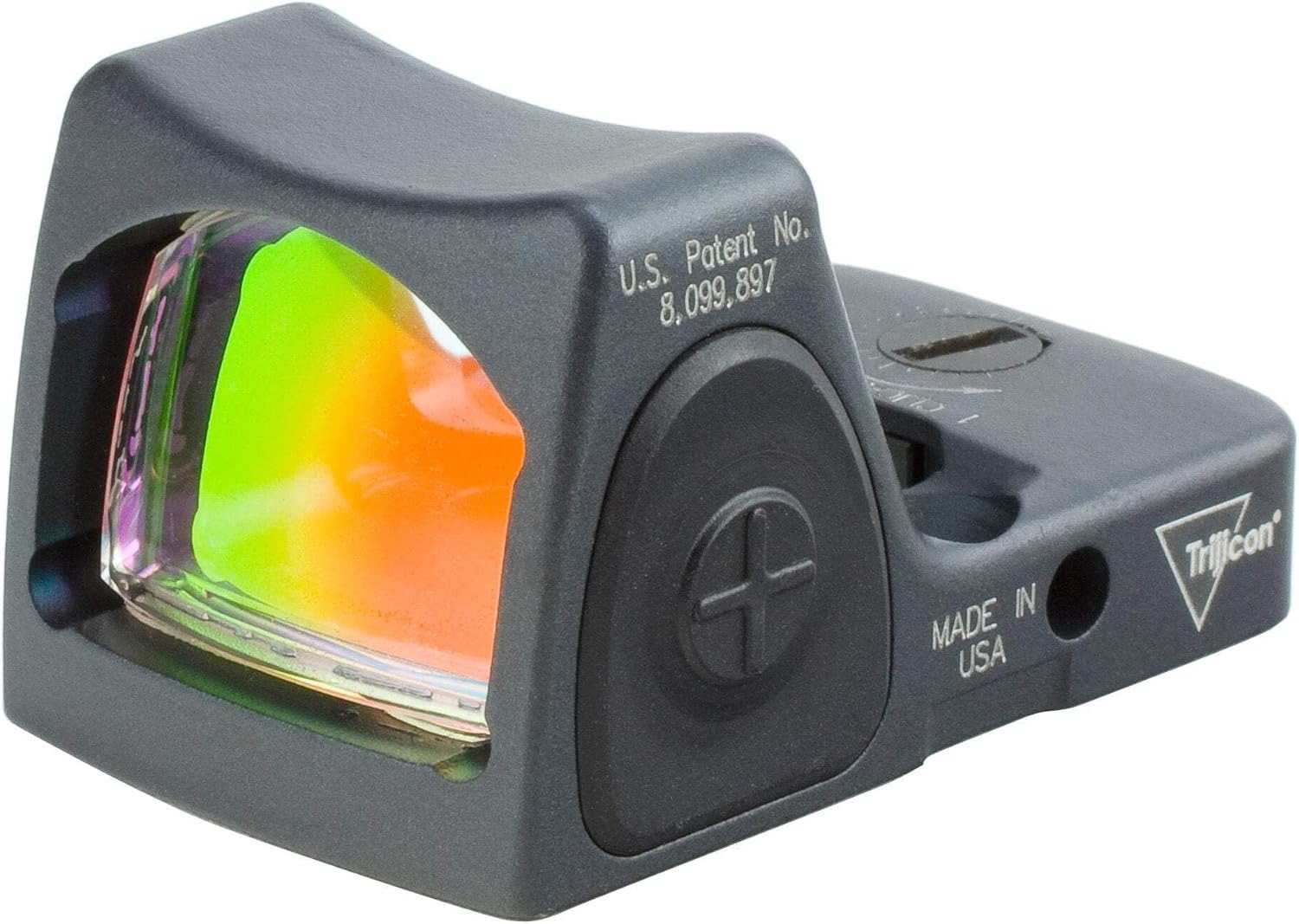
The RMR Type 2 is still the durability benchmark for pistol optics, and on the Beretta M9 platform it remains the optic I trust most for hard use or duty carry.
Specs
- Footprint: RMR
- Dot sizes: 3.25 MOA or 6.5 MOA
- Battery: CR2032 (bottom load)
- Housing: Forged aluminum
- Weight: 1.2 oz
- Waterproof: 20 meters
Pros
- Exceptional recoil durability
- Crisp dot with minimal flare
- Excellent sealing against moisture
- Large aftermarket mounting ecosystem
Cons
- Bottom battery requires removal
- Slight blue lens tint
- Window slightly smaller than competition optics
My hands-on notes
The RMR handles the Beretta’s slide velocity extremely well. Even with +P defensive loads, the optic maintains zero without wandering. I noticed almost no parallax shift inside realistic pistol distances (7–25 yards).
Co-witness height depends heavily on the mounting plate you choose. With most M9 dovetail plates, suppressor-height irons give a usable lower-third co-witness.
The buttons have excellent tactile feedback even with gloves — something I appreciate when running cold-weather drills.
What people say online
Across forums and Reddit threads, shooters consistently describe the RMR as the “buy once cry once” optic. The most common complaint remains the bottom-loading battery, but most users accept it for the durability.
Mounting clarity
Since the M9 isn’t natively optics ready, you’ll typically run an RMR-pattern dovetail mount or slide cut. The RMR footprint is by far the most supported option.
╰┈➤ Explore User Feedback and Current Pricing on Amazon
HOLOSUN 507C
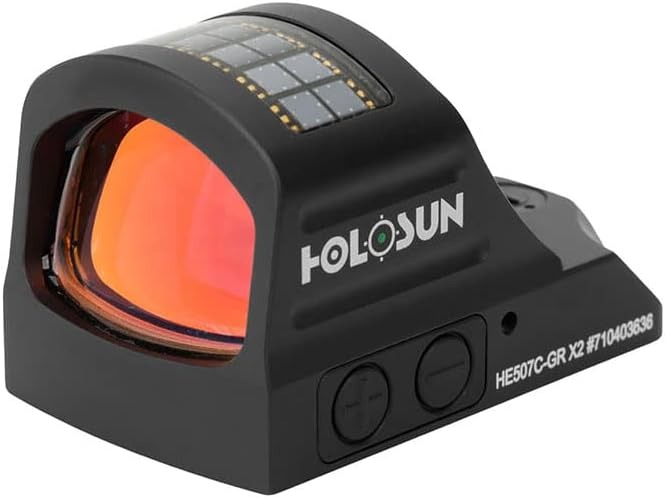
The Holosun 507C offers one of the best feature sets available in an RMR-footprint optic and works particularly well on Beretta M9 builds where mounting height can already be elevated.
Specs
- Footprint: RMR
- Reticle: 2 MOA dot / 32 MOA circle
- Battery: CR1632 side tray
- Solar backup: Yes
- Housing: 7075 aluminum
- Brightness settings: 10 daylight + 2 NV
Pros
- Side battery tray
- Multiple reticle system
- Solar fail-safe backup
- Excellent price-to-performance
Cons
- Slightly thicker window frame
- Some units show noticeable lens tint
- Buttons slightly recessed
My hands-on notes
On the M9, the 507C’s circle-dot reticle actually helps speed up presentation when the optic sits a little higher above the bore.
Parallax performance is solid. I noticed minimal dot movement unless the dot was pushed to the extreme edges of the window. The emitter sits fairly low in the housing, which reduces occlusion from the frame.
Button tactility is decent, though I find them a bit mushier than the RMR.
What people say online
Online communities frequently praise the optic’s value and battery design. Many shooters specifically choose it for pistols that require mounting plates because the side battery avoids re-zeroing.
Mounting clarity
The 507C shares the RMR footprint, so it works with nearly every Beretta M9 optic mount currently available.
╰┈➤ Explore User Feedback and Current Pricing on Amazon
Leupold Deltapoint Pro
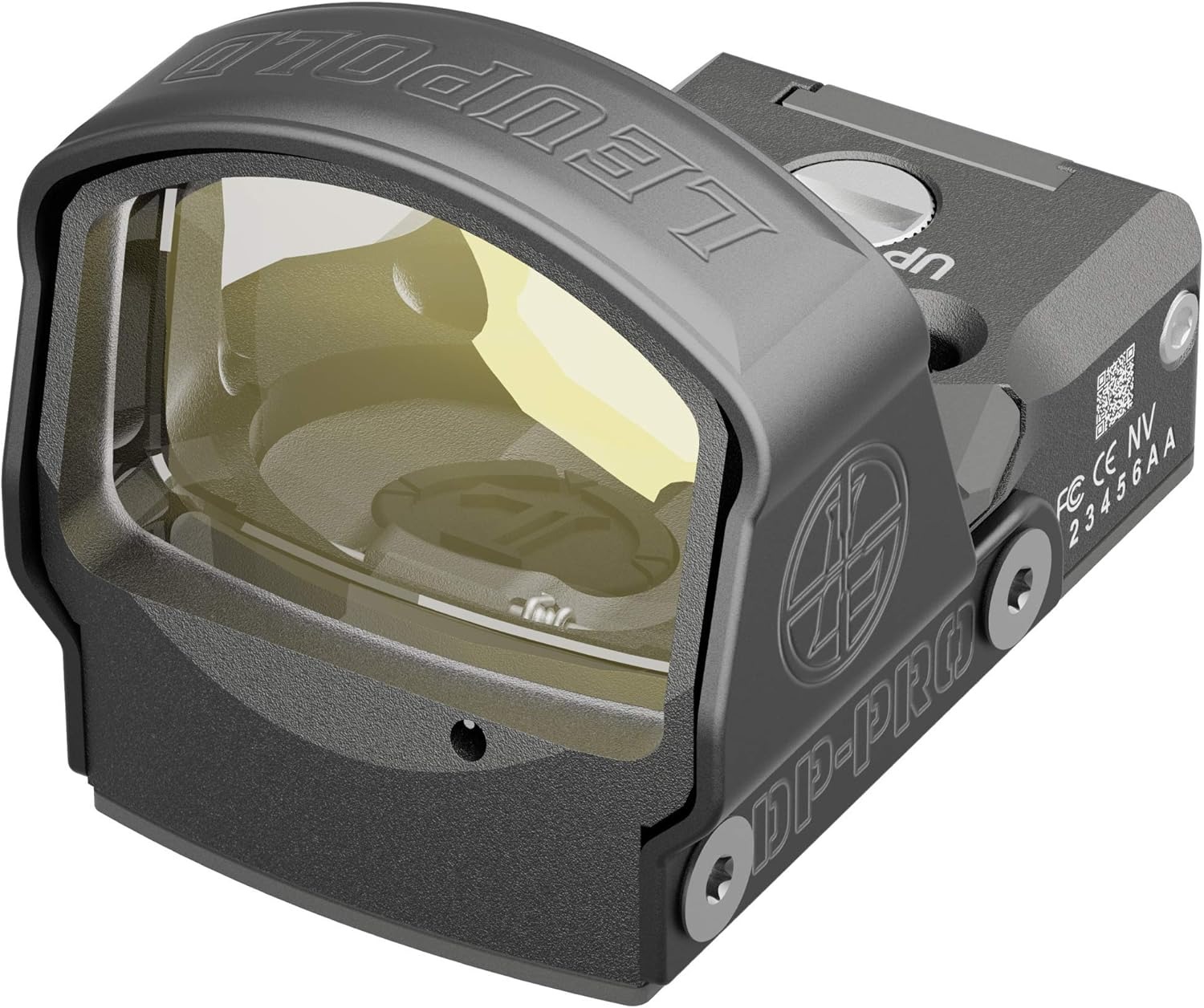
The DeltaPoint Pro stands out for one major reason: its massive viewing window. On pistols like the M9 where optic height may be slightly elevated, that larger window becomes a real advantage.
Specs
- Footprint: DeltaPoint Pro
- Dot: 2.5 MOA
- Battery: CR2032 top load
- Housing: Aluminum
- Brightness levels: 8
- Waterproof: Yes
Pros
- Extremely large window
- Top-loading battery
- Excellent glass clarity
- Durable aluminum body
Cons
- Slightly heavier optic
- Deck height higher than RMR
- Price higher than many competitors
My hands-on notes
The first thing you notice is the glass clarity. The tint is extremely minimal compared to most pistol optics.
The larger window helps mitigate presentation errors — something that can happen when the optic sits high on an M9 plate.
Parallax shift is extremely small inside typical pistol ranges. I also like the oversized brightness button, which is easy to manipulate even while wearing gloves.
What people say online
Most shooters praise the viewing window and durability. The optic has a strong following among competition shooters for that reason.
Mounting clarity
Because the DeltaPoint Pro uses its own footprint, you’ll need a compatible Beretta M9 plate or custom slide cut.
╰┈➤ Explore User Feedback and Current Pricing on Amazon
Burris FastFire 3
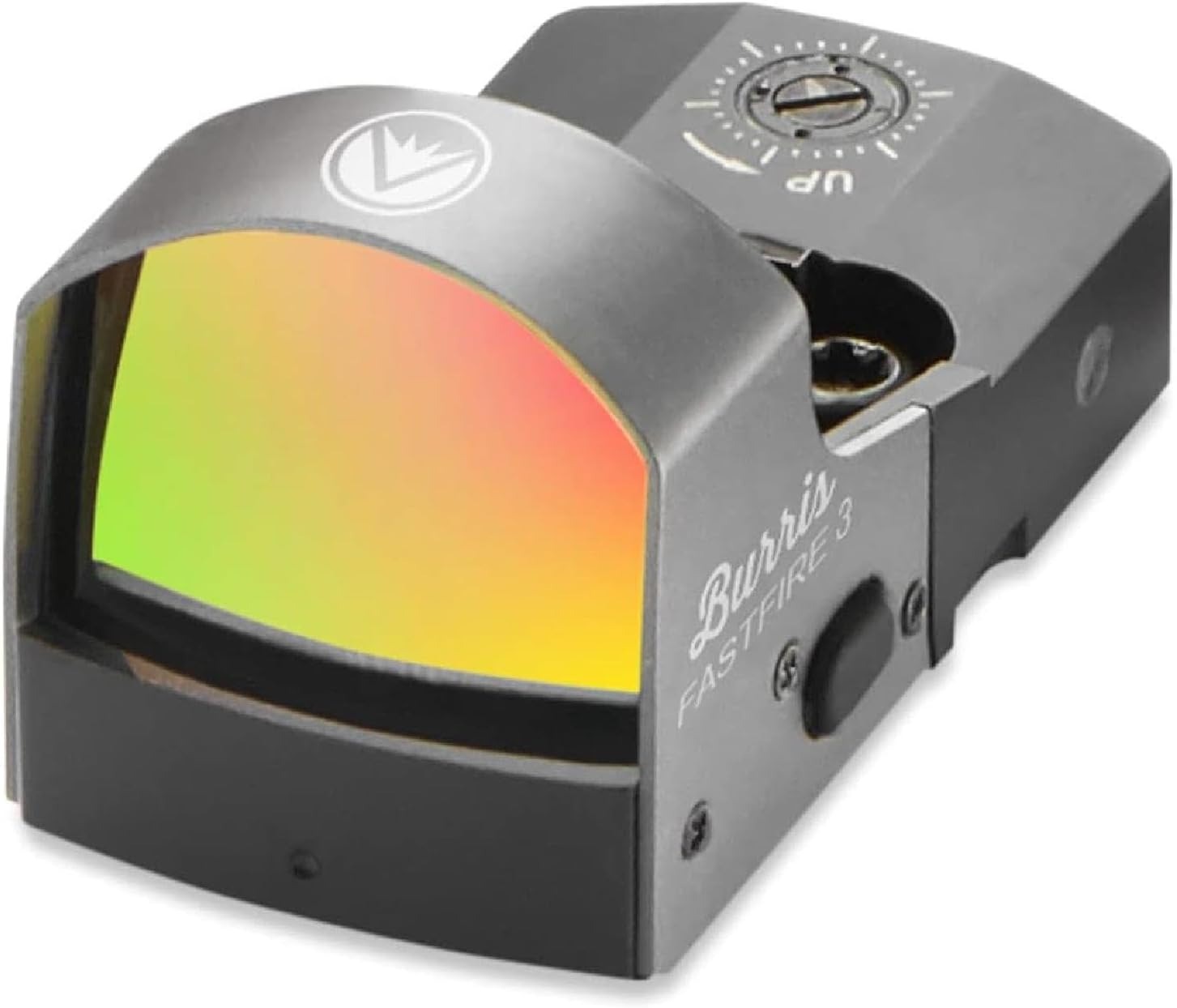
The FastFire 3 is one of the longest-running micro red dots in the pistol optics world and still works surprisingly well on metal-frame pistols like the Beretta.
Specs
- Footprint: FastFire
- Dot sizes: 3 MOA / 8 MOA
- Battery: CR1632 top load
- Weight: 0.9 oz
- Brightness: Automatic or manual
Pros
- Very lightweight
- Simple controls
- Affordable price
- Top battery access
Cons
- Smaller window
- Automatic brightness sometimes inconsistent
- Housing less rugged than premium optics
My hands-on notes
The FastFire 3 works best on range or recreational setups rather than duty guns. The lighter housing means it handles recoil fine but doesn’t inspire the same confidence as an RMR or MPS.
Parallax performance is respectable. However, the smaller window means you’ll notice dot movement sooner when you push your eye off center.
The battery compartment is very convenient and doesn’t require removing the optic.
What people say online
Users frequently recommend it as a beginner optic or budget upgrade. Durability is acceptable, though most shooters avoid using it for extreme duty environments.
Mounting clarity
The FastFire footprint is supported by many universal pistol plates, including several Beretta M9 dovetail mounts.
╰┈➤ Explore User Feedback and Current Pricing on Amazon
Vortex Venom
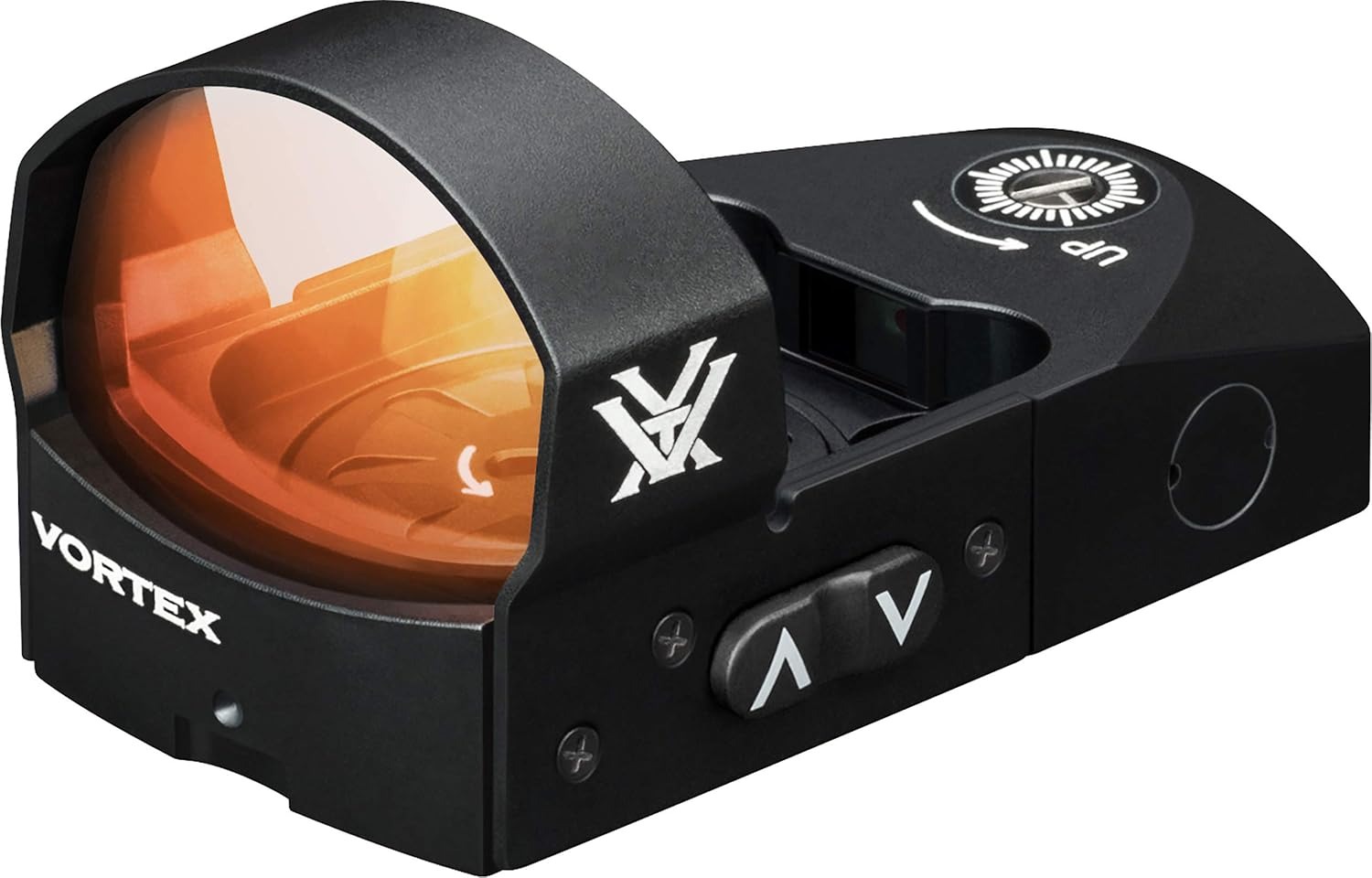
The Vortex Venom remains a popular optic thanks to its large window and straightforward design.
Specs
- Footprint: Venom / Docter
- Dot sizes: 3 MOA / 6 MOA
- Battery: CR1632 top load
- Weight: 1.1 oz
- Housing: Aluminum
Pros
- Large window for quick target acquisition
- Easy top battery replacement
- Clear glass with mild tint
- Strong warranty support
Cons
- Slightly taller deck height
- Buttons smaller than competitors
- Not as rugged as duty optics
My hands-on notes
On the M9, the Venom’s wide window helps compensate for the pistol’s slightly higher optic mounting position.
The dot itself is clean and round at moderate brightness levels. At maximum brightness I did notice a bit of blooming.
Parallax shift is minimal until the dot approaches the edge of the window. The controls are functional but not as tactile as some higher-end optics.
What people say online
Shooters frequently recommend the Venom for recreational use and competition pistols. The warranty from Vortex also gives many buyers confidence.
Mounting clarity
The Venom uses the Docter footprint, which many universal M9 optic plates support.
╰┈➤ Explore User Feedback and Current Pricing on Amazon
Steiner MPS
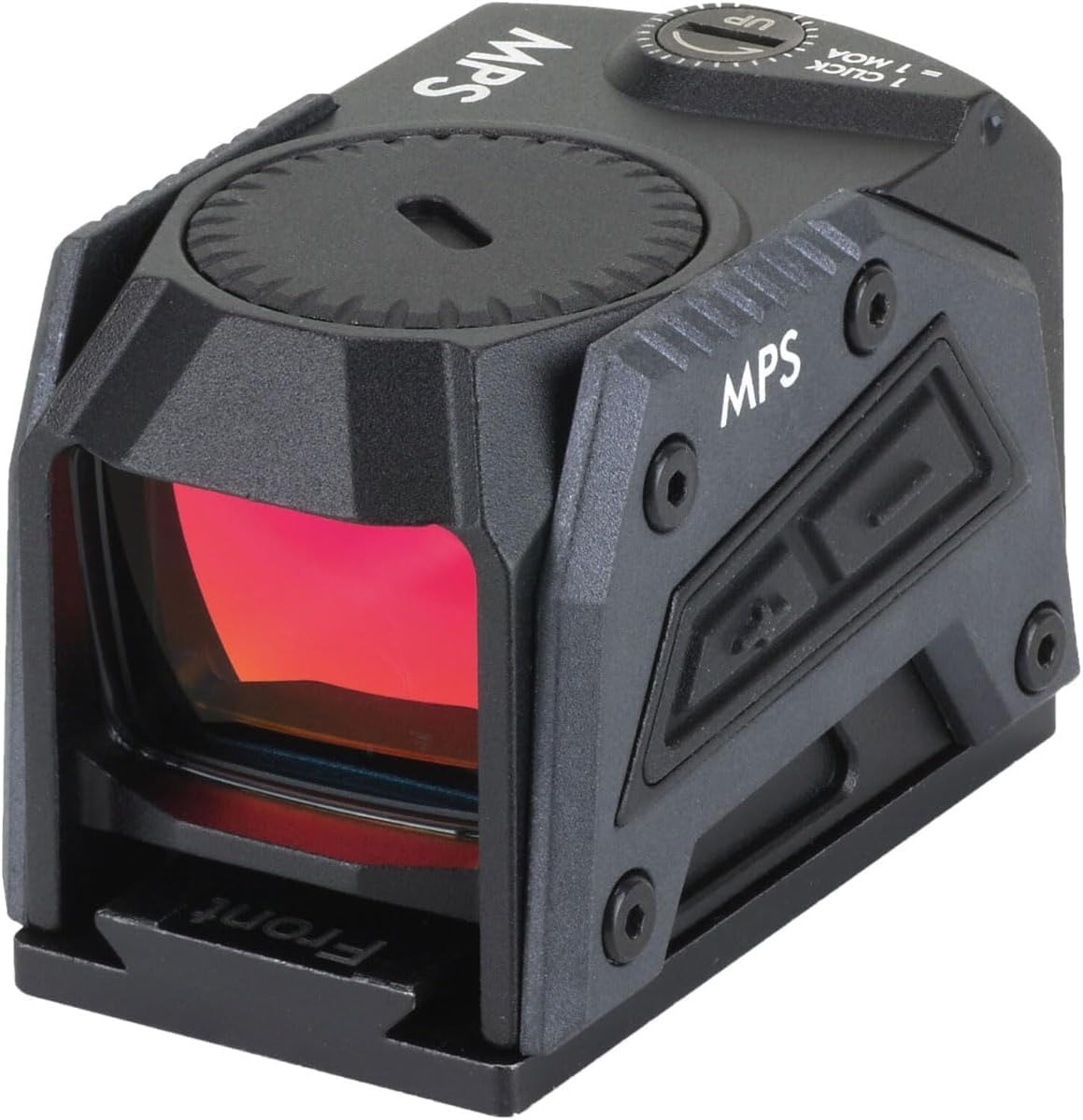
The Steiner MPS is an enclosed emitter optic designed for extreme durability. If you want maximum environmental protection on an M9 setup, this is one of the strongest choices available.
Specs
- Footprint: ACRO pattern
- Dot: 3.3 MOA
- Battery: CR1632 side tray
- Housing: Aluminum
- Waterproof: 10 meters
Pros
- Fully enclosed emitter
- Exceptional durability
- Crisp dot with minimal distortion
- Excellent weather resistance
Cons
- Heavier than open emitters
- Slightly smaller window
- Requires ACRO-pattern plate
My hands-on notes
The enclosed emitter is the main advantage here. Rain, dust, and debris simply can’t block the emitter like they can with open designs.
The glass has very little tint, and the dot remains crisp even at high brightness. Recoil handling is excellent — the optic barely shifts even under rapid fire.
Parallax is extremely well controlled and comparable to other premium optics.
What people say online
Many shooters describe the MPS as a serious competitor to the Aimpoint ACRO for duty pistols.
Mounting clarity
You’ll need an ACRO-compatible mounting plate for Beretta M9 installations.
╰┈➤ Explore User Feedback and Current Pricing on Amazon
How I Tested / Evaluation Criteria
Parallax performance
Parallax error matters more on pistol optics than many shooters realize. During testing, I intentionally moved my eye position while keeping the pistol stationary at 10 and 25 yards. The best optics showed minimal dot drift until the reticle approached the extreme edge of the window.
Co-witness and deck height
Because the Beretta M9 typically uses adapter plates, optic deck height becomes critical. I evaluated how easily each optic allowed a lower-third co-witness with suppressor-height iron sights. Taller optics can make target transitions slower if the presentation angle changes.
Durability
Metal-frame pistols like the M9 produce a slightly different recoil impulse compared to polymer striker guns. I evaluated housing strength, lens mounting rigidity, and sealing quality during extended firing sessions.
Battery system
Battery design affects real-world usability. Side-loading trays are the most convenient because they allow battery replacement without removing the optic. Bottom batteries require re-zeroing but often improve sealing.
Brightness range
A usable optic needs a wide brightness range. I tested dots under bright sunlight and indoor lighting. Optics with overly aggressive brightness curves tend to bloom and obscure small targets.
Glass quality
Lens clarity directly affects speed and accuracy. I examined tint, distortion near the window edges, and how clearly the emitter projected the dot at various brightness levels.
Controls ergonomics
Button placement matters more than many people expect. I tested brightness controls with both bare hands and gloves to see how easily they could be manipulated.
Mounting ecosystem
Finally, I evaluated how easy it is to mount each optic on a Beretta M9 using existing plates or slide cuts. Footprints with broader aftermarket support generally offer better long-term compatibility.
How to Choose the Right Red Dot for This Gun
Choosing a red dot for a Beretta M9 requires thinking about mounting solutions before anything else. Unlike modern optics-ready pistols, the M9 was originally designed with a traditional slide profile, so most setups rely on either dovetail mounts or custom slide milling.
The first factor to consider is footprint compatibility. RMR-pattern optics dominate the pistol red dot market, which means plates, screws, and replacement parts are widely available. For M9 builds that use adapter plates, choosing an RMR-pattern optic usually gives the most flexibility.
The second factor is deck height. Because mounting plates sit above the slide, the optic will usually sit higher than on factory optics-ready pistols. Larger windows — like those found on the DeltaPoint Pro or Vortex Venom — can make it easier to acquire the dot during presentation.
Another important consideration is emitter design. Open emitters are lighter and more common, but they can become obstructed by debris or rain. Enclosed emitter optics like the Steiner MPS solve that problem but add weight and size.
Battery placement also affects usability. Bottom-loading batteries can be extremely durable but require removing the optic to replace them. Side-loading trays are much more convenient if you shoot frequently.
Finally, think about how the optic will actually be used. Range pistols and competition guns can prioritize large windows and lighter weight. Defensive or duty setups should prioritize durability and environmental protection.
FAQs
Do Beretta M9 pistols come optics ready?
Most traditional M9 models do not come optics ready. Mounting a red dot usually requires either a dovetail plate or a slide cut performed by a gunsmith.
What footprint works best on an M9?
RMR footprint optics tend to be the easiest to mount because they have the largest adapter plate ecosystem.
Are enclosed emitter optics worth it?
For harsh environments or duty use, enclosed emitter optics can be extremely valuable because debris cannot block the emitter.
What dot size works best for pistols?
Most shooters prefer 3–4 MOA dots for general use because they balance precision and fast acquisition.
Do I need suppressor-height sights?
If you want a co-witness with your optic, suppressor-height sights are usually required when using M9 mounting plates.
Conclusion
Finding the right optic for a classic metal-frame pistol requires balancing durability, window size, and mounting compatibility. After extensive testing and evaluation, the optics in this guide represent the most practical choices if you're searching for the Best Red Dot for Beretta M9.