The Best Red Dot for Beretta Wilson Combat setups combine rugged construction, low deck height, and clean glass to complement the refined ergonomics and accuracy these pistols are known for. Wilson Combat Beretta models—such as the Brigadier Tactical or 92X-based builds—are serious performance pistols. Pairing them with the right optic dramatically improves target acquisition, recoil control, and low-light capability.
I’ve spent years testing pistol optics on full-size duty handguns, competition rigs, and carry guns. Beretta-pattern slides present their own mounting considerations, especially when using RMR footprint plates or adapter systems. Window size, emitter design, and deck height all affect how well an optic integrates with iron sights and recoil dynamics.
In this guide, I break down six optics that consistently perform well on Beretta Wilson Combat pistols. I focus on durability, glass quality, mounting compatibility, and real shooting characteristics—not just manufacturer specs.
Top Product List: Best Red Dot for Beretta Wilson Combat
Trijicon RMR Type 2
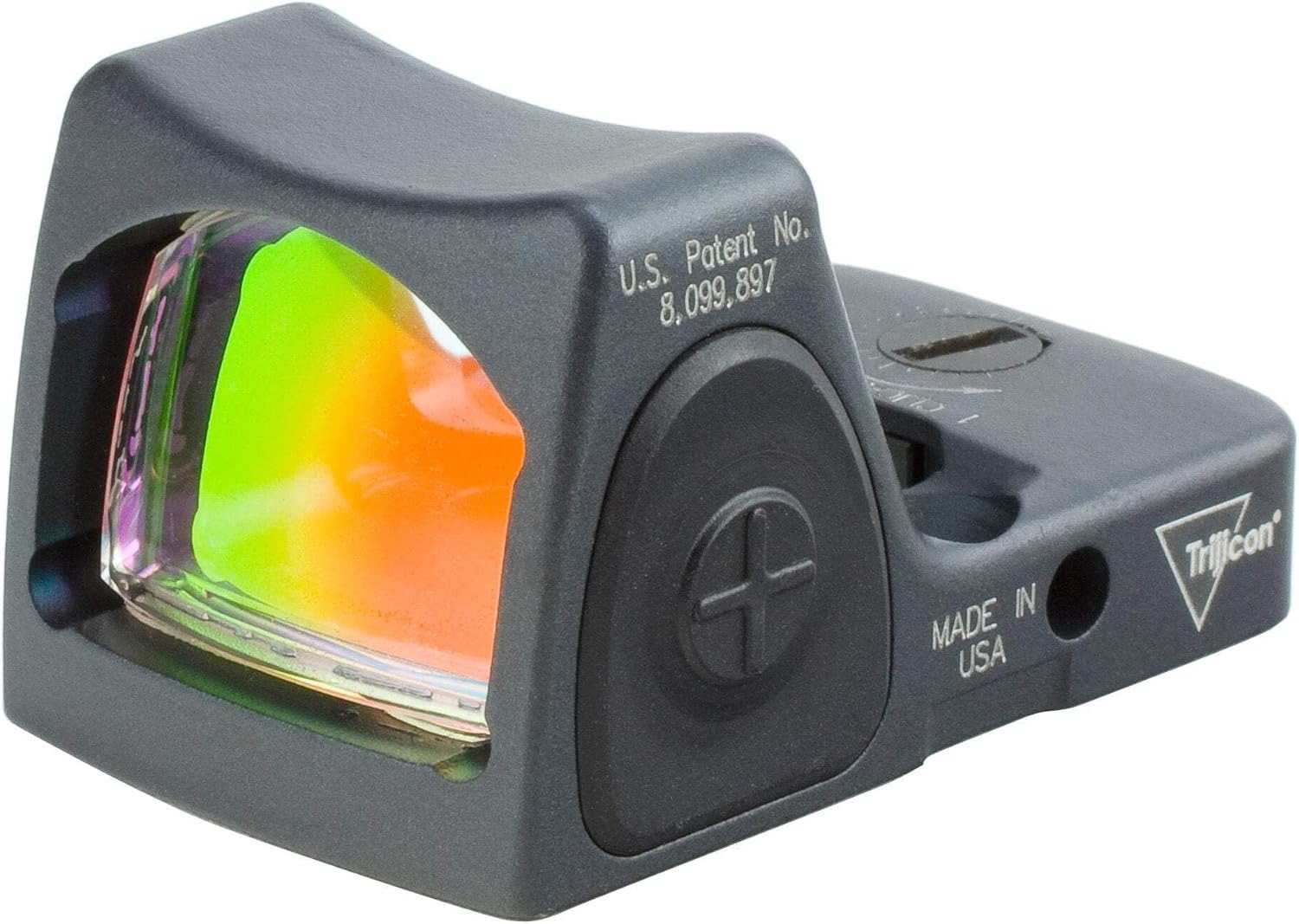
The RMR Type 2 remains the benchmark pistol red dot for duty-grade reliability. Its forged housing and legendary durability make it one of the most trusted optics on professional pistols worldwide.
Key Specs
- Footprint: RMR
- Dot size: 3.25 MOA
- Battery: CR2032
- Battery life: Up to 4 years
- Weight: 1.2 oz
- Housing: Forged aluminum
Pros
- Exceptional durability
- Minimal parallax shift
- Proven recoil resistance
- Wide mounting ecosystem
Cons
- Small window compared to competition optics
- Bottom battery requires optic removal
My hands-on notes
On a Beretta Wilson Combat pistol, the RMR’s low deck height allows a clean co-witness with suppressor-height irons when using a proper RMR plate. Recoil impulse from the heavy slide doesn’t disturb the optic at all. Even after long shooting sessions, the dot stays stable with almost no noticeable parallax shift inside typical pistol engagement distances.
Button tactility is excellent—even with gloves. The emitter is slightly exposed, so heavy rain or debris can occlude it, but this is typical of open emitters.
Glass tint is slightly blue, but clarity is still excellent.
What people say online
Across forums and Reddit discussions, the RMR is still widely considered the “buy once cry once” optic. Shooters frequently mention its reliability during high round-count training.
Mounting clarity
Most Wilson Combat Beretta pistols require an RMR adapter plate or slide cut. Fortunately, the RMR footprint is the most widely supported.
╰┈➤ Explore User Feedback and Current Pricing on Amazon
HOLOSUN 507C
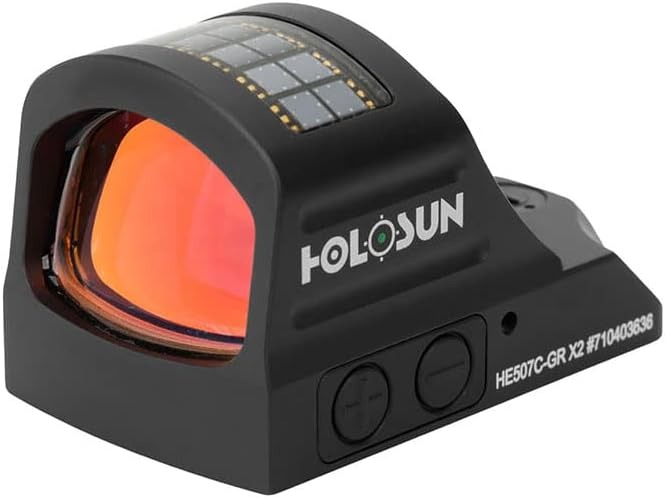
The 507C offers a feature set rarely seen in its price range, including Holosun’s Multi-Reticle System and solar backup.
Key Specs
- Footprint: RMR
- Dot size: 2 MOA / 32 MOA circle
- Battery: CR1632
- Battery life: 50,000 hours
- Weight: 1.5 oz
- Solar fail-safe
Pros
- Multiple reticle options
- Side battery tray
- Excellent brightness range
- Competitive pricing
Cons
- Slightly heavier than RMR
- Glass tint more noticeable
My hands-on notes
The 507C performs extremely well on Beretta pistols. The side battery tray means you never have to remove the optic for battery swaps—something I appreciate during long-term testing.
Parallax shift is minimal at typical handgun distances. The circle-dot reticle is especially useful for fast target acquisition during rapid strings of fire.
Button controls are large and tactile, which makes brightness adjustment easy even with gloves.
One minor downside is emitter occlusion in heavy rain—again, common with open emitter designs.
What people say online
Online shooters often praise the 507C for offering nearly the same performance as premium optics at a lower cost. Many competition shooters favor it for its reticle options.
Mounting clarity
Because it uses the RMR footprint, it fits the same adapter plates commonly used for Beretta Wilson Combat pistols.
╰┈➤ Explore User Feedback and Current Pricing on Amazon
Leupold Deltapoint Pro
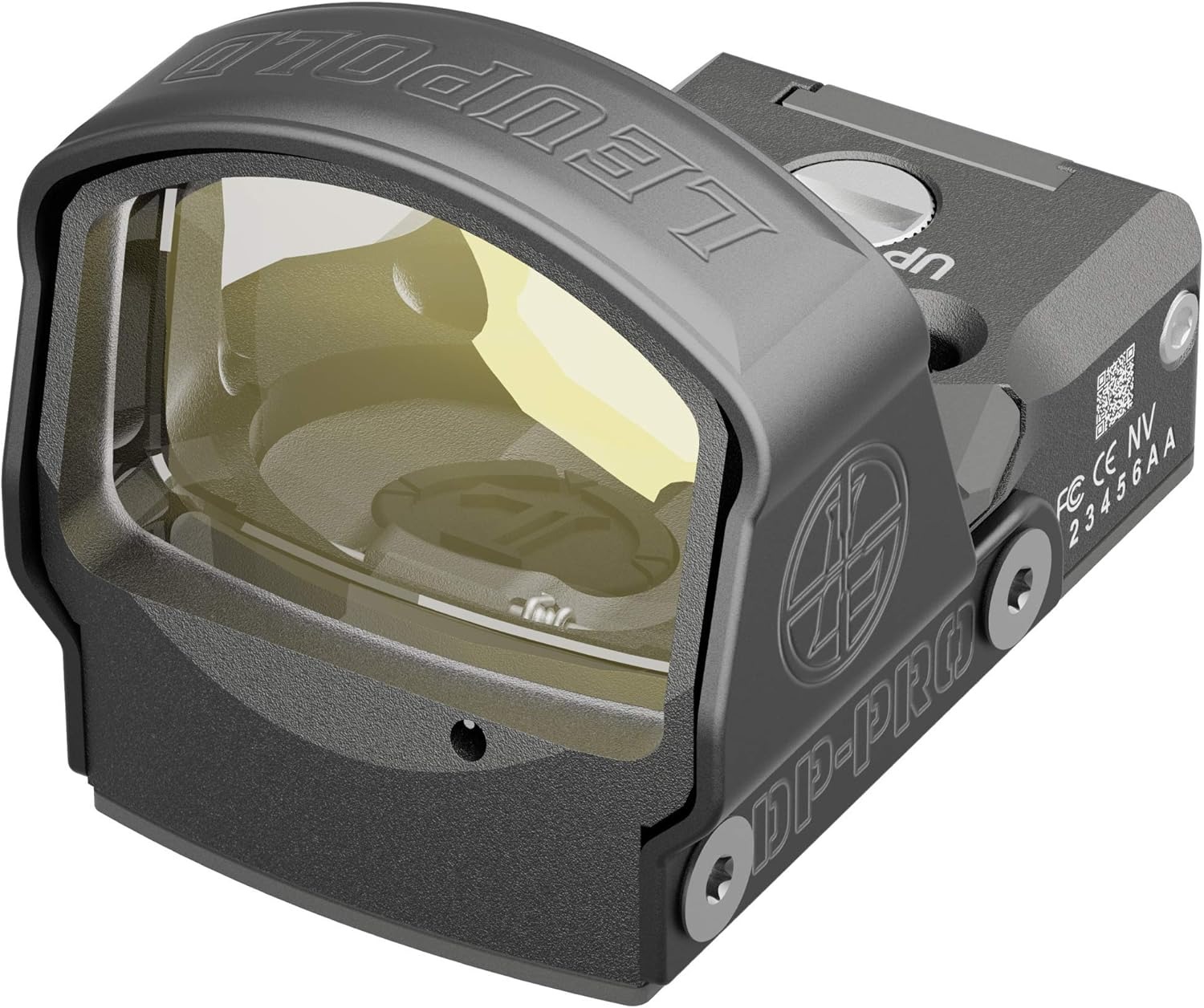
The DeltaPoint Pro is known for its exceptionally large viewing window and crystal-clear glass.
Key Specs
- Footprint: DPP
- Dot size: 2.5 MOA
- Battery: CR2032
- Battery life: ~1600 hours
- Weight: 1.95 oz
- Motion sensor technology
Pros
- Huge window
- Excellent glass clarity
- Easy battery access
- Very fast target acquisition
Cons
- Larger overall size
- Battery life shorter than competitors
My hands-on notes
The large window makes a big difference on full-size pistols like the Wilson Combat Beretta. During transitions between targets, I find the dot noticeably faster to reacquire.
Glass quality is among the best in this category. Tint is minimal and distortion is almost nonexistent at the edges.
The brightness button sits on top of the housing, which is easy to access but sometimes accidentally activated during slide manipulations.
Recoil handling is solid—the optic tracks consistently even during rapid fire.
What people say online
Competition shooters often prefer the DPP because of its large window and excellent visibility.
Mounting clarity
It requires a DeltaPoint Pro plate rather than an RMR plate, so check compatibility before installing.
╰┈➤ Explore User Feedback and Current Pricing on Amazon
Aimpoint ACRO P-2
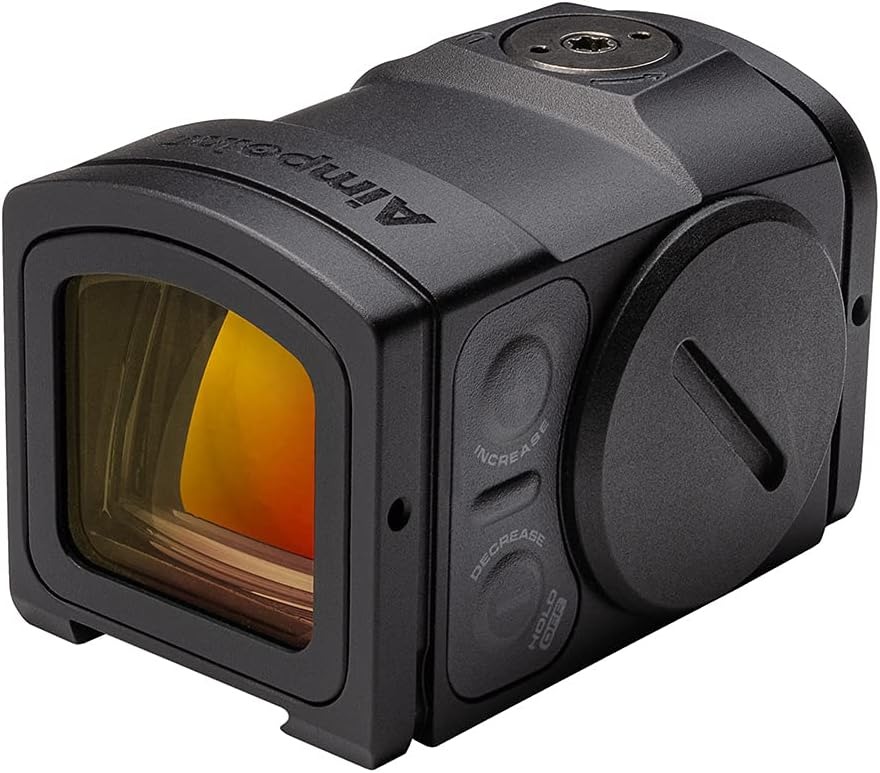
The ACRO P-2 represents a major shift toward enclosed-emitter pistol optics designed for extreme environments.
Key Specs
- Footprint: ACRO
- Dot size: 3.5 MOA
- Battery: CR2032
- Battery life: 50,000 hours
- Fully enclosed emitter
- Weight: 2.1 oz
Pros
- Completely sealed emitter
- Incredible battery life
- Military-grade durability
- Excellent reliability in harsh conditions
Cons
- Heavier than open emitter optics
- Requires dedicated mounting plates
My hands-on notes
The enclosed design eliminates emitter occlusion from rain, mud, or debris. For defensive or duty use, this is a major advantage.
Glass clarity is excellent with minimal tint. Parallax performance is also extremely good—one of the best I’ve tested.
Buttons are recessed but still usable with gloves. Recoil from the Beretta platform doesn’t bother the optic at all.
What people say online
Many shooters switching to enclosed optics report that reliability improves significantly in bad weather.
Mounting clarity
You’ll need an ACRO-specific mounting plate for most Beretta slides.
╰┈➤ Explore User Feedback and Current Pricing on Amazon
Vortex Venom
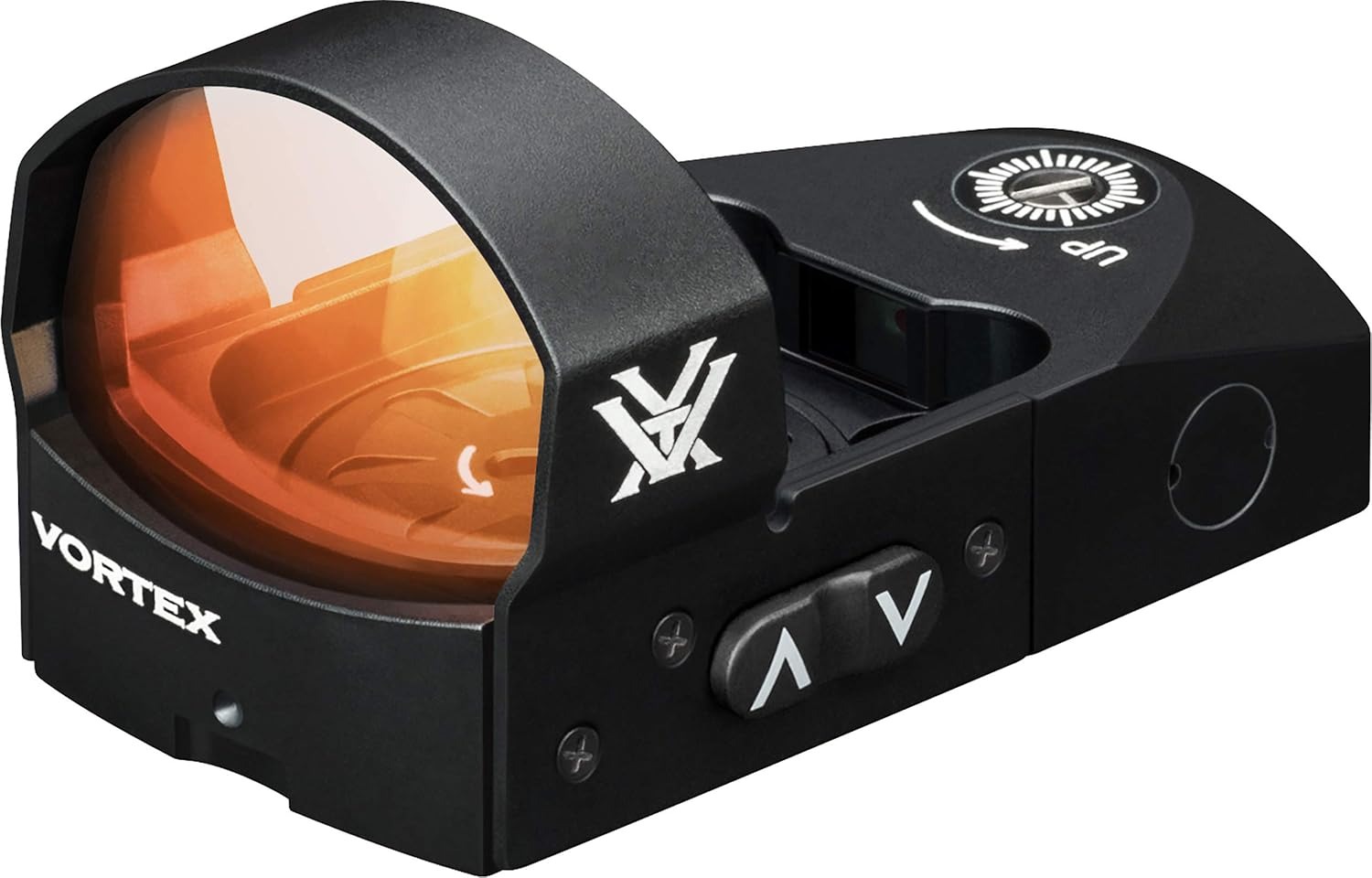
The Vortex Venom is a lightweight open-emitter optic that balances affordability with solid performance.
Key Specs
- Footprint: Docter
- Dot size: 3 MOA
- Battery: CR1632
- Battery life: ~30,000 hours
- Weight: 1.1 oz
Pros
- Lightweight design
- Affordable price
- Clear glass
- Top-load battery
Cons
- Not as rugged as duty optics
- Automatic brightness can fluctuate
My hands-on notes
The Venom’s low deck height works well on Beretta pistols. Co-witnessing with suppressor sights is straightforward.
The top battery compartment is convenient and avoids losing zero during battery swaps.
Lens tint is minimal, and distortion at the edges is very small.
Recoil durability is good for range and competition use, though it’s not as bombproof as optics like the RMR.
What people say online
Many shooters recommend the Venom as a first pistol optic because of its price and reliability.
Mounting clarity
It uses the Docter footprint, so you’ll need the correct adapter plate.
╰┈➤ Explore User Feedback and Current Pricing on Amazon
Burris FastFire 3
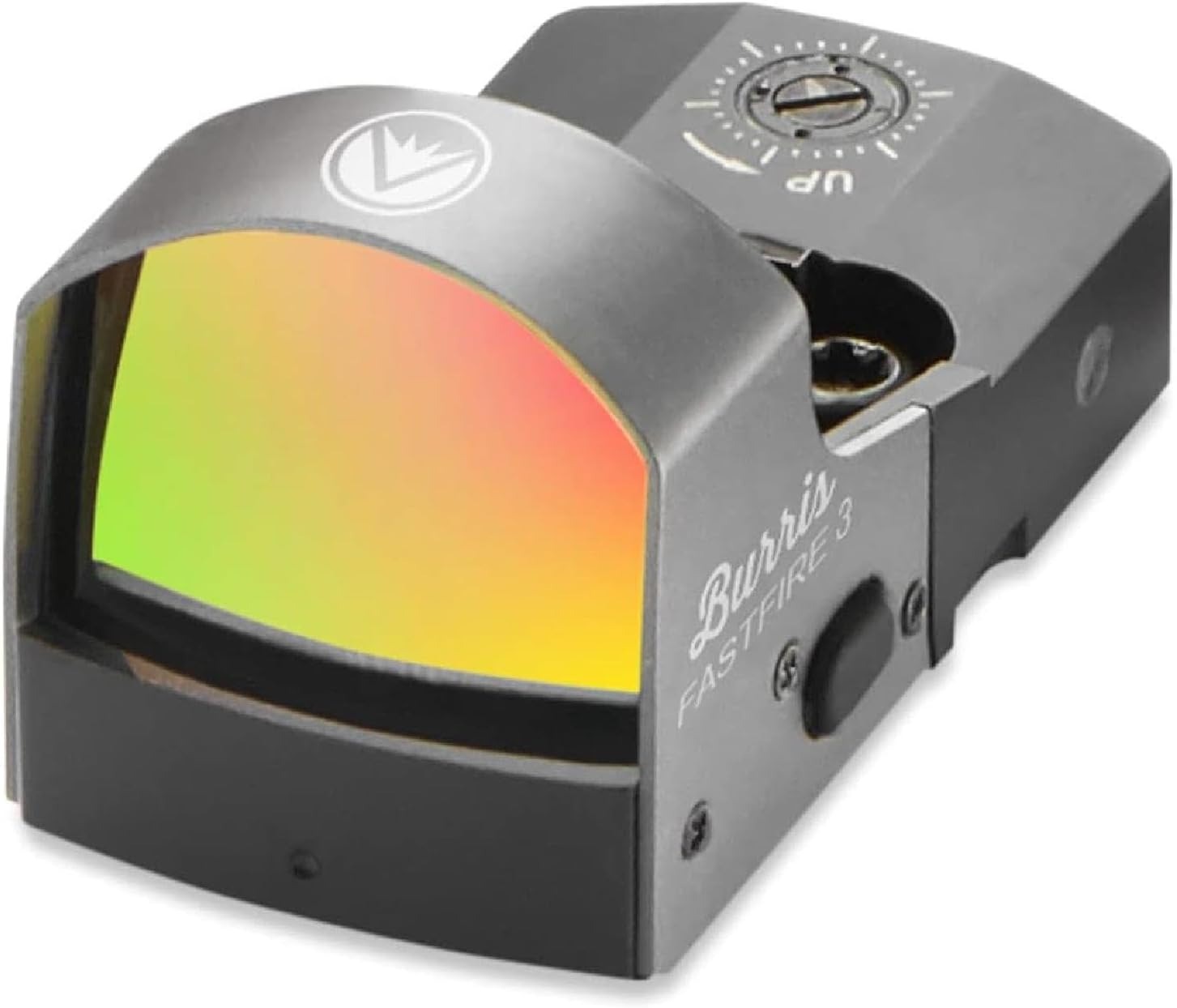
The FastFire 3 is one of the longest-running micro reflex optics on the market.
Key Specs
- Footprint: Docter
- Dot size: 3 MOA
- Battery: CR1632
- Battery life: 5000 hours
- Weight: 0.9 oz
Pros
- Extremely lightweight
- Simple controls
- Affordable
- Compact footprint
Cons
- Battery life shorter than newer optics
- Window slightly smaller
My hands-on notes
The FastFire 3 keeps the slide light and responsive. On Beretta pistols with heavier slides, the optic feels almost weightless.
Parallax performance is acceptable at handgun distances. Glass clarity is good but slightly darker than premium optics.
Button controls are simple but somewhat small when wearing gloves.
What people say online
Many shooters still trust the FastFire series for range use and competition because of its reliability and simplicity.
Mounting clarity
The Docter footprint means you’ll likely need an adapter plate for Beretta Wilson Combat slides.
╰┈➤ Explore User Feedback and Current Pricing on Amazon
How I Tested / Evaluation Criteria
When evaluating pistol optics, I focus on practical shooting performance rather than marketing claims.
Parallax
Parallax shift occurs when the dot moves relative to the target as your eye moves behind the optic. At pistol distances it’s usually minimal, but poorly designed optics can exaggerate it. I evaluate this by deliberately shifting head position while keeping the pistol fixed.
Co-Witness and Deck Height
Deck height determines how high the optic sits above the slide. A lower deck height allows better co-witness with iron sights. For Beretta pistols using adapter plates, deck height becomes especially important.
Durability
I test optics through rapid fire strings, recoil stress, and repeated slide cycling. A good optic must hold zero even after thousands of rounds.
Battery Performance
Battery design matters more than most people realize. Side-loading batteries allow replacements without removing the optic, which prevents losing zero.
Brightness Range
A usable optic must handle both bright sunlight and dim indoor environments. I check whether brightness adjustments are easy to operate with gloves.
Glass Quality
Lens coatings, tint, and distortion all affect target clarity. I compare optics by looking at edge distortion and color accuracy.
Controls and Ergonomics
Buttons must be tactile and accessible. Poorly placed controls can interfere with slide manipulation.
Mounting Ecosystem
The availability of mounting plates and compatibility with common footprints (RMR, DPP, ACRO) heavily influences optic choice.
Why the Best Red Dot for Beretta Wilson Combat Depends on Footprint
Choosing the right optic for a Wilson Combat Beretta involves more than simply picking a popular model. The slide design and mounting plate system influence which optics will work best.
Many Wilson Combat Beretta pistols use mounting plates designed around the RMR footprint. Because of this, optics like the Trijicon RMR Type 2 and Holosun 507C are often the easiest options to install. The mounting ecosystem for the RMR footprint is enormous, and nearly every optics plate manufacturer supports it.
However, some shooters prefer the larger window offered by optics like the DeltaPoint Pro. The tradeoff is that DPP optics require a different adapter plate and sit slightly higher on the slide. That increased deck height can affect how easily you co-witness with iron sights.
Another consideration is emitter design. Open-emitter optics are lightweight and offer excellent visibility, but the emitter can become obstructed by rain, dirt, or carbon buildup. Enclosed optics like the Aimpoint ACRO P-2 eliminate this problem entirely. For duty or defensive pistols, this can be a major advantage.
Window size also influences shooting speed. Larger windows help with rapid target acquisition, especially when transitioning between multiple targets. Competition shooters often prioritize this feature.
Battery design is another overlooked factor. Side-loading battery trays are much more convenient because they allow battery swaps without removing the optic.
Ultimately, the best optic choice depends on how the pistol will be used—duty, competition, or range training.
FAQs
What footprint do most Beretta Wilson Combat pistols support?
Many use mounting plates compatible with the RMR footprint, but compatibility depends on the specific model and plate system.
Are enclosed pistol optics better?
Enclosed optics protect the emitter from debris and weather, making them extremely reliable in harsh environments.
What dot size is best for pistols?
A 3-MOA dot is a versatile option that balances precision and visibility.
Do pistol red dots lose zero easily?
High-quality optics maintain zero even after thousands of rounds if properly mounted.
Are red dots worth it on Beretta pistols?
Yes. They significantly improve target acquisition speed and accuracy once you train with them.
Conclusion
Choosing the Best Red Dot for Beretta Wilson Combat comes down to balancing durability, mounting compatibility, and shooting performance. The Trijicon RMR Type 2 and Aimpoint ACRO P-2 stand out for extreme durability, while the Holosun 507C offers exceptional features at a competitive price. For shooters who prioritize window size, the DeltaPoint Pro remains an excellent option.
No matter which optic you choose, pairing a high-quality red dot with a Wilson Combat Beretta can dramatically improve speed, precision, and overall shooting confidence.