Best Red Dot for Bullseye Pistol shooters prioritize precision, consistency, and an optic that allows extremely fine aiming on small targets at distance. Bullseye competition is unforgiving—tiny aiming errors at 25 or 50 yards become missed points quickly. After testing dozens of pistol optics over the years, I’ve learned that the ideal sight for this discipline is not the same as what works for defensive carry or tactical shooting.
For precision pistol shooting, the priorities shift toward large viewing windows, crisp dot emitters, minimal parallax shift, and predictable adjustments. Durability still matters because slide-mounted optics endure thousands of recoil cycles, but glass clarity and dot quality become just as important.
In this guide, I evaluate six optics that consistently perform well for precision pistol shooters. I looked closely at window size, deck height, emitter design, lens tint, brightness control, battery access, and mounting footprints to determine which models truly deliver consistent performance on the bullseye line.
Top Product List: Best Red Dot for Bullseye Pistol
Why These Optics Define the Best Red Dot for Bullseye Pistol
Bullseye shooting rewards consistency. During testing I focused on optics that provide clear glass, minimal distortion across the viewing window, and repeatable adjustment tracking. The sights below also provide stable emitters that remain crisp even at lower brightness levels—important when shooting slow-fire strings in bright daylight.
Trijicon SRO
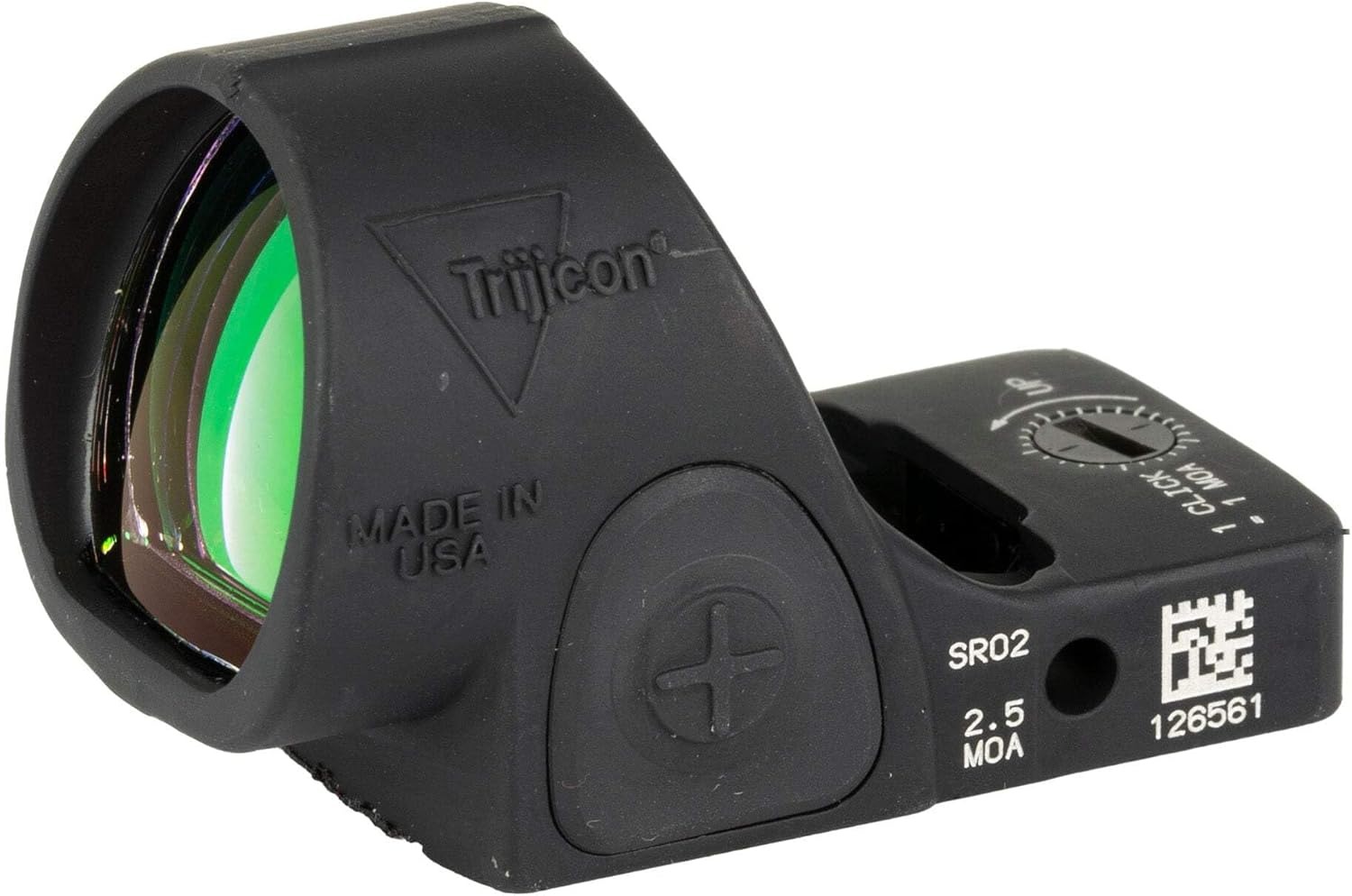
The Trijicon SRO is widely regarded as one of the most competition-friendly pistol optics ever produced. Its massive circular window immediately stands out compared with traditional reflex sights. For bullseye shooting, that large viewing area makes it easier to maintain dot tracking during recoil and quickly reacquire the sight picture.
Key Specs
- Footprint: RMR pattern
- Window: Large circular competition window
- Dot sizes: 1 MOA, 2.5 MOA, 5 MOA
- Battery: CR2032 top-load
- Adjustment: 1 MOA clicks
- Housing: 7075 aluminum
Pros
- Extremely large viewing window
- Crisp emitter with minimal starburst
- Top battery access
- Excellent glass clarity
Cons
- More exposed emitter design
- Slight blue lens tint
- Higher cost than most pistol dots
My hands-on notes
The first thing I noticed during live fire is how easy the dot is to track during recoil. The oversized window means the optic rarely loses the dot even during rapid strings. Parallax shift is minimal inside the central portion of the lens. When mounted on a slide-cut bullseye pistol, the deck height allows comfortable co-witness with suppressor-height irons.
Brightness controls are tactile and easy to press even with gloves. The buttons produce a clear click without feeling mushy.
What people say online
Competitive shooters consistently praise the SRO’s large field of view and precise dot. Many USPSA and precision pistol competitors report improved target acquisition compared with RMR-style windows.
Mounting clarity
The optic uses the RMR footprint, so it fits many slide cuts directly. On pistols with different cuts, a thin adapter plate may be required.
╰┈➤ Explore User Feedback and Current Pricing on Amazon
Burris FastFire 3
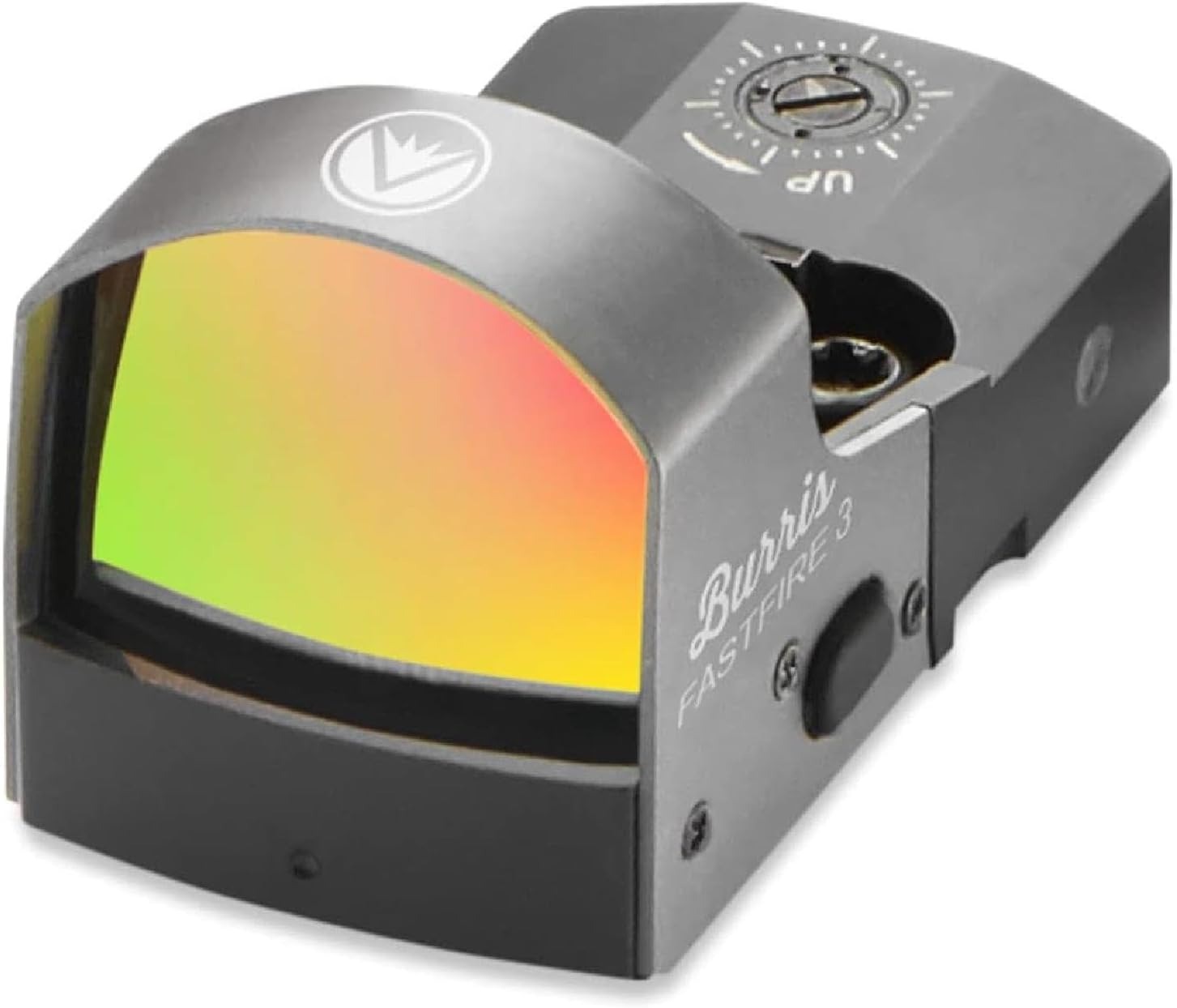
The Burris FastFire 3 has long been popular among budget-minded precision shooters. Despite its lower price, it offers reliable performance and a surprisingly clear lens.
Key Specs
- Footprint: Docter/Noblex
- Window: Medium reflex lens
- Dot sizes: 3 MOA or 8 MOA
- Battery: CR1632 top load
- Weight: 0.9 oz
- Adjustment: 1 MOA
Pros
- Affordable entry into competition optics
- Top-loading battery compartment
- Lightweight design
- Simple controls
Cons
- Smaller window than competition optics
- Auto-brightness can fluctuate
- Housing less rugged than premium models
My hands-on notes
The FastFire 3’s emitter produces a reasonably clean dot, though it can appear slightly fuzzy at high brightness. For bullseye shooting I prefer the 3 MOA version, which provides a precise aiming point without covering too much of the target.
Parallax shift is minimal near the center of the window but increases toward the edges. With consistent head position this is rarely noticeable.
The battery door design is straightforward and easy to access without removing the optic from the slide.
What people say online
Many shooters recommend the FastFire 3 as a starter optic for bullseye shooting. Forums frequently mention its reliability and simple operation, although some users report the auto-brightness system being overly sensitive.
Mounting clarity
The optic uses the Docter footprint, which is compatible with numerous mounting plates and slide cuts.
╰┈➤ Explore User Feedback and Current Pricing on Amazon
Vortex Venom
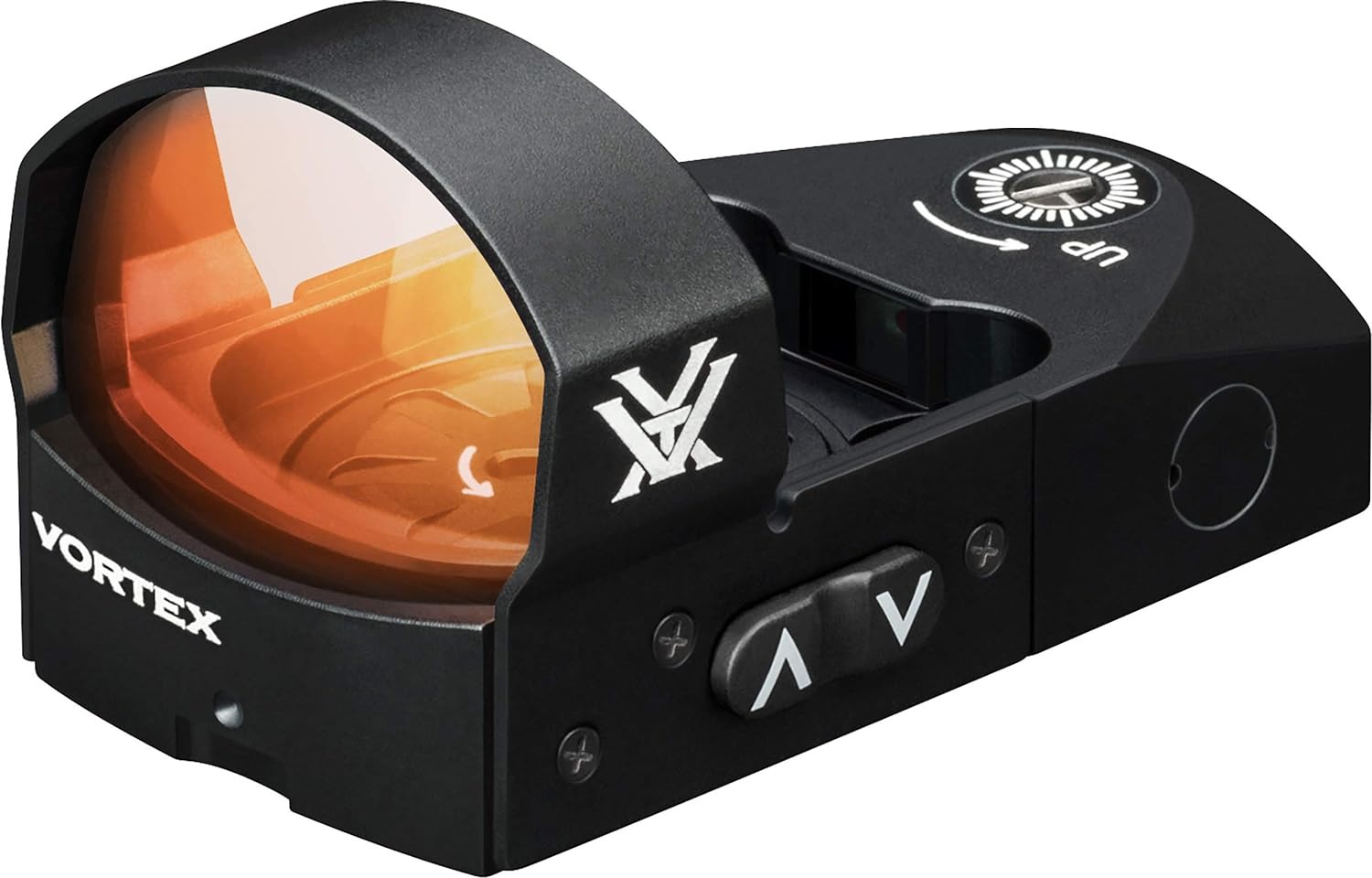
The Vortex Venom is a favorite among shooters who want clear glass and reliable controls without spending premium-tier money. Its open reflex design and larger lens provide an excellent sight picture.
Key Specs
- Footprint: Docter pattern
- Window: Large rectangular lens
- Dot sizes: 3 MOA or 6 MOA
- Battery: CR1632 top load
- Adjustment: 1 MOA
- Housing: Aluminum
Pros
- Very clear glass
- Large viewing window
- Top battery access
- Intuitive brightness controls
Cons
- Slight green lens tint
- Exposed emitter can collect debris
- Auto-sleep feature may annoy some shooters
My hands-on notes
The Venom’s glass quality stands out immediately. Distortion at the edges of the lens is minimal, which is useful when tracking the dot during recoil.
Button tactility is excellent—the controls provide firm feedback even when wearing shooting gloves. I also appreciate the top battery access, which prevents losing zero when changing batteries.
Parallax shift is well controlled inside the central viewing area. During slow-fire testing at 25 yards, point-of-impact variation remained extremely consistent.
What people say online
Many shooters praise the Venom for its excellent warranty and dependable electronics. It’s frequently recommended as a step up from entry-level reflex sights.
Mounting clarity
The optic uses the Docter/Noblex footprint, allowing direct mounting on many competition plates.
╰┈➤ Explore User Feedback and Current Pricing on Amazon
Vortex Viper
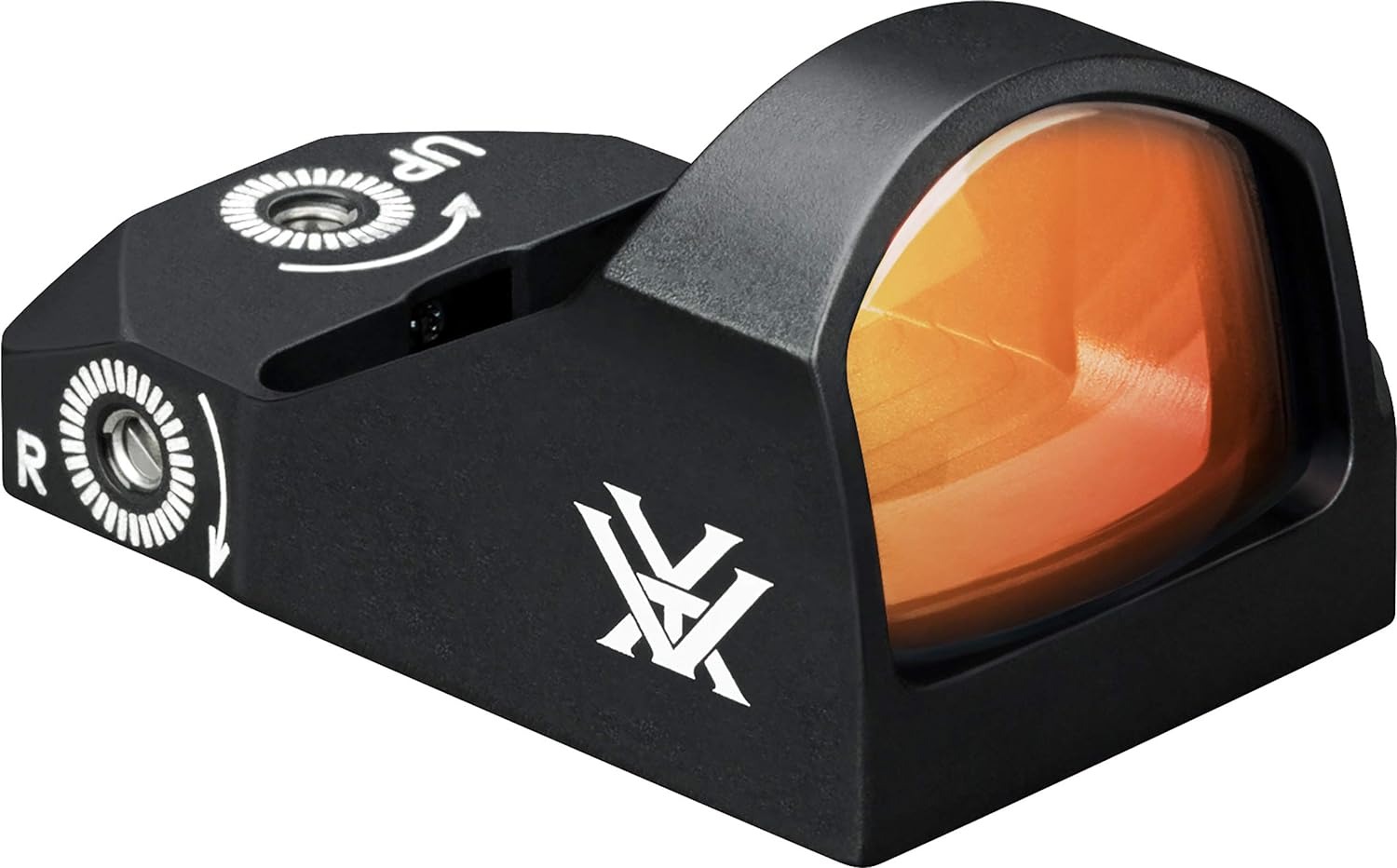
The Vortex Viper is similar to the Venom but features a slightly lower deck height, which some shooters prefer when mounting optics on pistols with limited slide clearance.
Key Specs
- Footprint: Docter pattern
- Dot size: 6 MOA
- Battery: CR2032 bottom mount
- Adjustment: 1 MOA
- Housing: Aluminum
Pros
- Lower deck height
- Durable aluminum housing
- Good lens clarity
- Compact design
Cons
- Bottom battery requires removal
- Smaller window than Venom
- Dot slightly larger for precision
My hands-on notes
The Viper’s lower deck height helps maintain a natural sight picture, especially when using iron sight backups. Co-witness alignment tends to be easier compared with taller optics.
However, the bottom battery compartment means the optic must be removed for replacement, which can require re-zeroing.
The 6 MOA dot appears bright and stable but may be slightly large for shooters who prefer extremely precise aiming points at 50 yards.
What people say online
Many shooters appreciate the Viper’s reliability and rugged housing. Some competitive shooters prefer it over the Venom due to the lower mounting profile.
Mounting clarity
Uses the Docter footprint, making it compatible with many pistol optic plates.
╰┈➤ Explore User Feedback and Current Pricing on Amazon
Leupold DeltaPoint Pro
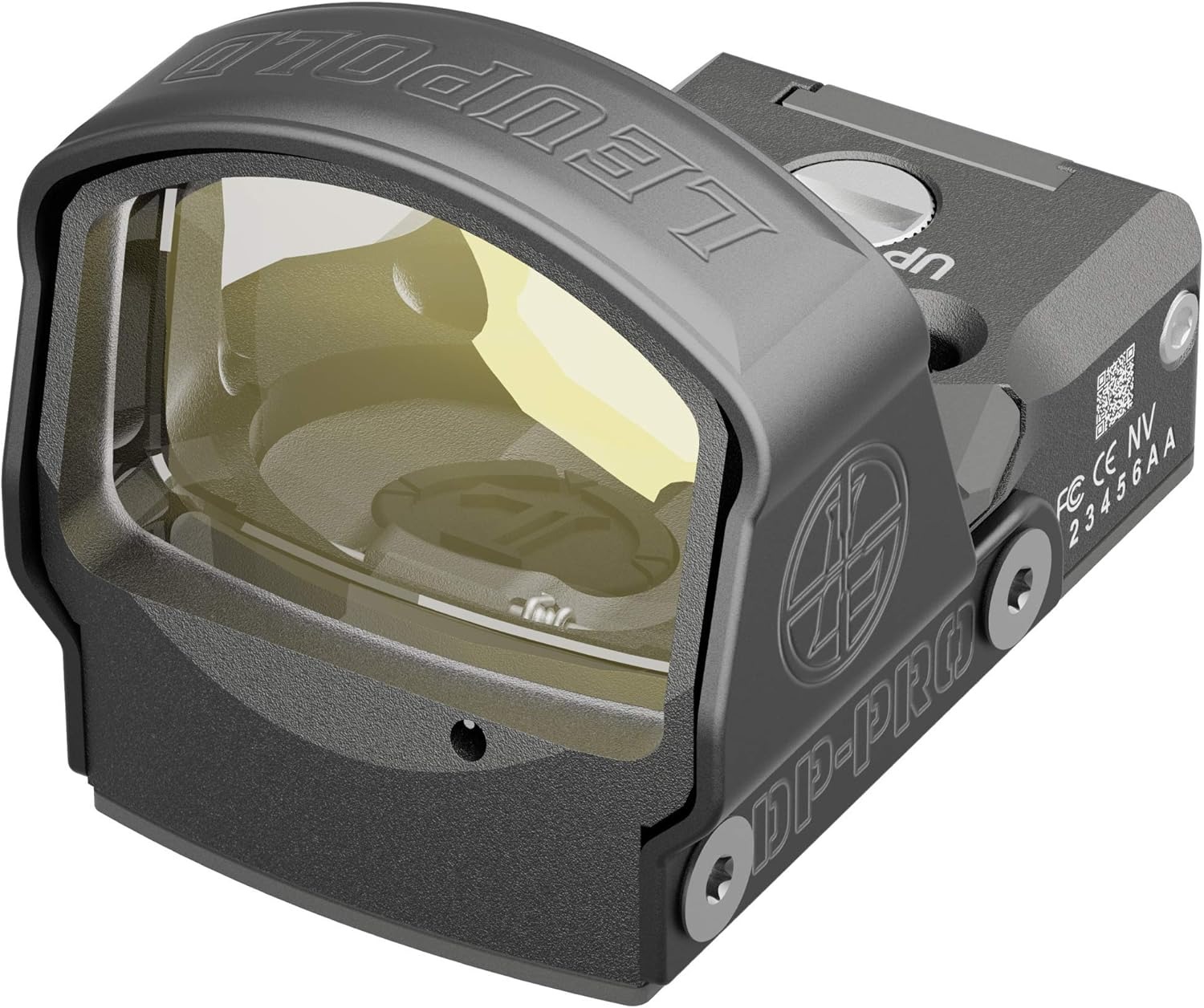
The DeltaPoint Pro is one of the most durable slide-mounted optics available. Its reinforced hood design protects the lens while maintaining a large viewing window.
Key Specs
- Footprint: DeltaPoint Pro pattern
- Dot sizes: 2.5 MOA or 6 MOA
- Battery: CR2032 top load
- Adjustment: 1 MOA
- Housing: Steel reinforced
Pros
- Exceptional durability
- Large viewing window
- Crisp emitter
- Excellent adjustment tracking
Cons
- Slight lens tint
- Higher price point
- Footprint less common than RMR
My hands-on notes
The DeltaPoint Pro handles recoil extremely well. After thousands of rounds, the optic maintained zero with no shift.
The glass quality is impressive—edge distortion is minimal, and the emitter produces a crisp aiming point. I also like the large activation button that doubles as brightness control.
Parallax shift is well controlled within the central viewing area, which is important when maintaining precise hold during slow fire.
What people say online
Many shooters consider the DeltaPoint Pro one of the most rugged pistol optics ever made, particularly popular among competition shooters and law enforcement users.
Mounting clarity
The optic uses the DPP footprint, which requires compatible slide cuts or adapter plates.
╰┈➤ Explore User Feedback and Current Pricing on Amazon
Sig Sauer Romeo3
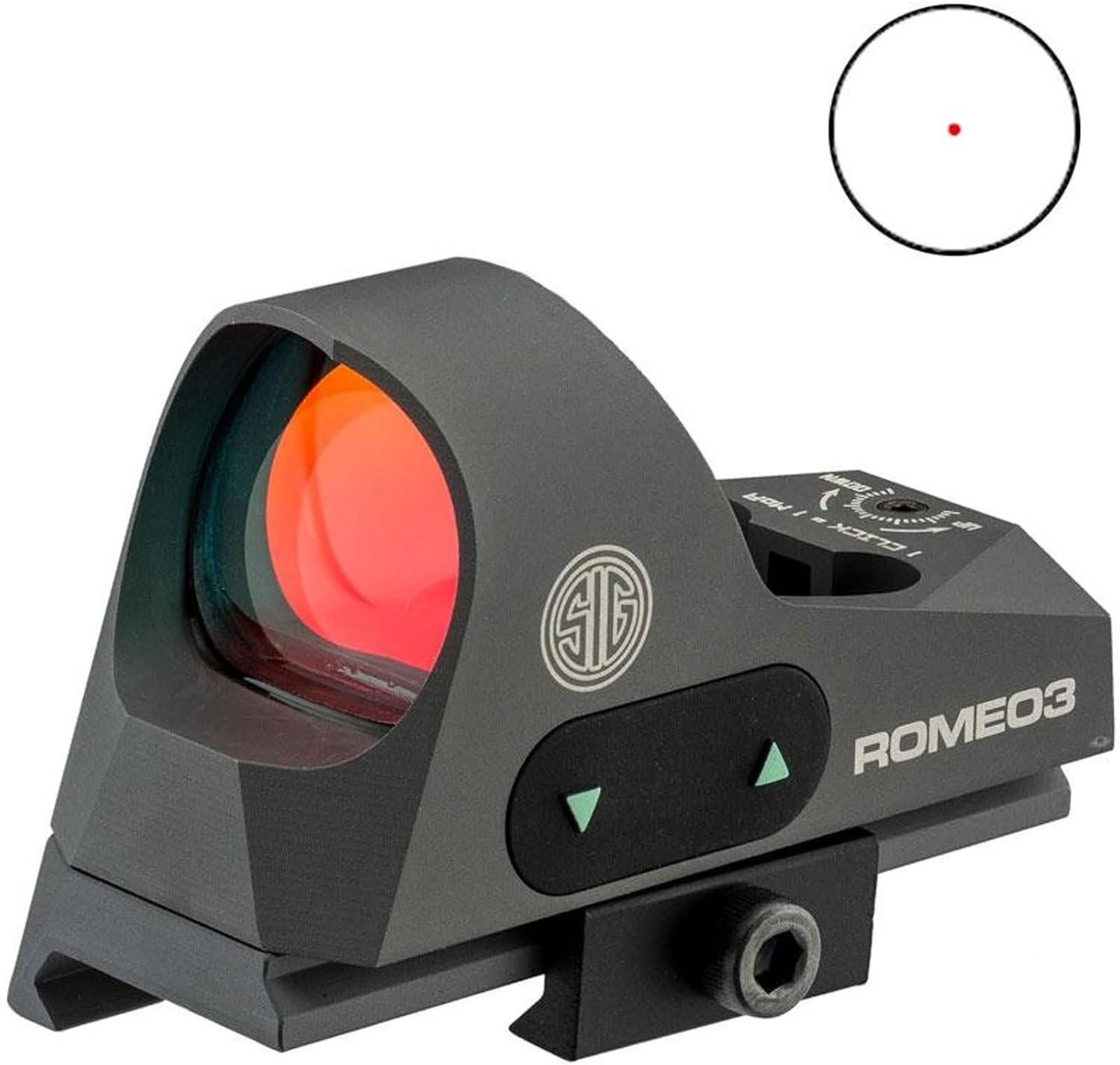
The Romeo3 is a competition-oriented reflex sight designed specifically for precision shooting. Its large lens and open architecture provide a clear sight picture similar to dedicated race-gun optics.
Key Specs
- Footprint: C-More pattern
- Dot sizes: 3 MOA or 6 MOA
- Battery: CR2032
- Adjustment: 1 MOA
- Housing: Magnesium alloy
Pros
- Huge viewing window
- Very lightweight
- Crisp emitter
- Fast target acquisition
Cons
- Exposed emitter design
- Not ideal for harsh environments
- Mounting footprint less common
My hands-on notes
The Romeo3 excels at tracking the dot through recoil, which is critical during timed and rapid-fire stages. The large lens allows excellent peripheral vision.
Controls are simple and responsive. Brightness buttons provide clear tactile feedback, even with gloves.
The optic’s magnesium housing keeps weight extremely low, which reduces slide inertia on competition pistols.
What people say online
Competitive shooters often praise the Romeo3 for its large window and light weight, making it popular in open-division pistol setups.
Mounting clarity
The Romeo3 uses the C-More footprint, typically requiring dedicated mounting plates or competition slide cuts.
╰┈➤ Explore User Feedback and Current Pricing on Amazon
How I Tested / Evaluation Criteria
Parallax
Parallax shift is inevitable in reflex optics, but quality designs minimize it near the center of the lens. I evaluated each optic by shifting head position while maintaining the dot on target at 25 yards. The best optics showed minimal point-of-impact shift until the dot moved near the edge of the window.
Co-Witness / Deck Height
Deck height determines how high the optic sits above the slide. Lower optics often allow easier co-witness with iron sights and produce a more natural sight picture. During testing I compared mounting height and evaluated how naturally the pistol aligned with the optic.
Durability
Slide-mounted optics endure significant recoil impulse. I evaluated housing strength, lens protection, and sealing. Optics with reinforced frames or steel protective shrouds generally performed better over extended round counts.
Battery
Battery placement matters for practical maintenance. Top-loading batteries allow quick replacement without removing the optic, preventing zero shift. I also evaluated battery life and power management features.
Brightness Range
Precision shooting requires fine brightness control. I tested each optic across different lighting conditions to determine whether the lowest settings remained visible without blooming.
Glass Quality
Lens clarity and coatings affect both brightness and color distortion. I evaluated each optic for tint, distortion near the edges, and overall clarity while shooting at distance.
Controls Ergonomics
Buttons and adjustment screws must be easy to manipulate under range conditions. I tested button tactility while wearing gloves and verified that brightness adjustments provided predictable changes.
Mounting Ecosystem
Finally, I considered mounting compatibility. Optics using common footprints like RMR or Docter are easier to install on most pistols, while specialized footprints may require dedicated plates.
How to Choose the Right Red Dot for This Gun
Selecting the right optic for precision pistol shooting requires balancing several important factors. Bullseye competition emphasizes consistency and precision rather than speed, so some features that matter for defensive shooting become less important.
The first factor is dot size. Smaller dots provide a more precise aiming point at longer distances. Many bullseye shooters prefer 1–3 MOA dots because they cover less of the target at 50 yards. Larger dots are faster to acquire but may obscure the scoring rings on smaller targets.
The second consideration is window size. Larger windows make it easier to maintain visual awareness of the dot during recoil. This becomes especially important when firing timed or rapid-fire strings. Optics like the Trijicon SRO or Sig Romeo3 excel here because their viewing windows are significantly larger than traditional pistol sights.
Another important factor is lens clarity and coatings. High-quality optics minimize distortion and color tint. Excessive tint can reduce contrast when shooting against dark targets, while edge distortion can make precise alignment more difficult.
Emitter design also matters. Open emitter optics provide larger windows but are more exposed to debris. Enclosed emitters offer better environmental protection but sometimes sacrifice viewing area.
Battery access is another practical concern. Optics with top-loading battery compartments allow quick replacement without removing the optic from the slide. Bottom battery designs may require re-zeroing after replacement.
Mounting compatibility should also be considered before purchasing an optic. Different pistols use different mounting footprints, such as RMR, Docter/Noblex, DeltaPoint Pro, or C-More patterns. Choosing an optic compatible with your slide cut can simplify installation and reduce the need for adapter plates.
Finally, consider weight and balance. Heavier optics can slightly alter slide cycling and recoil impulse. Lightweight competition optics often improve recoil tracking, which can make it easier to maintain a consistent sight picture during strings of fire.
FAQs
What dot size is best for bullseye shooting?
Most bullseye shooters prefer 1–3 MOA dots because they provide a precise aiming point without covering too much of the target at 50 yards.
Are larger windows better for competition shooting?
Yes. Larger windows help shooters maintain visual tracking of the dot during recoil and improve sight acquisition.
Do pistol red dots lose zero when changing batteries?
Some optics require removal to access the battery, which may require re-zeroing. Top-loading battery designs avoid this issue.
Are enclosed emitters better for bullseye shooting?
Not necessarily. Open emitter optics often provide larger windows, which many competition shooters prefer.
Can these optics work on any pistol?
Compatibility depends on the slide cut or mounting plate. Always verify the footprint pattern before purchasing.
Conclusion
After extensive testing and comparison, the optics in this guide represent the strongest contenders for competitive precision shooting. Each offers a combination of clear glass, stable emitters, reliable adjustments, and durable construction—all essential characteristics for high-level accuracy.
For shooters seeking the Best Red Dot for Bullseye Pistol, the Trijicon SRO and Sig Sauer Romeo3 stand out for their large windows and crisp dots, while the Vortex and Burris models offer excellent value for precision shooters entering the sport.