Best Red Dot for Glock 17 is a question I get constantly from shooters who want faster target acquisition without sacrificing durability on a duty-sized pistol. The Glock 17 has long been a benchmark handgun for law enforcement, competition, and defensive shooters, and pairing it with a quality pistol optic can dramatically improve both speed and precision.
But not every optic works well on this platform. Deck height, mounting footprint, window size, emitter design, and durability under recoil all matter. Some optics look great on paper but struggle with lens distortion, poor brightness control, or unreliable battery systems.
In this guide, I break down six optics I’ve personally evaluated on Glock 17-length slides. I paid close attention to real-world factors like parallax shift, glass clarity, button ergonomics with gloves, and recoil impulse handling during rapid fire.
If you're upgrading your pistol or setting up a duty-ready optic system, these are the red dots I trust most.
Top Product List: Best Red Dot for Glock 17
Trijicon RMR Type 2
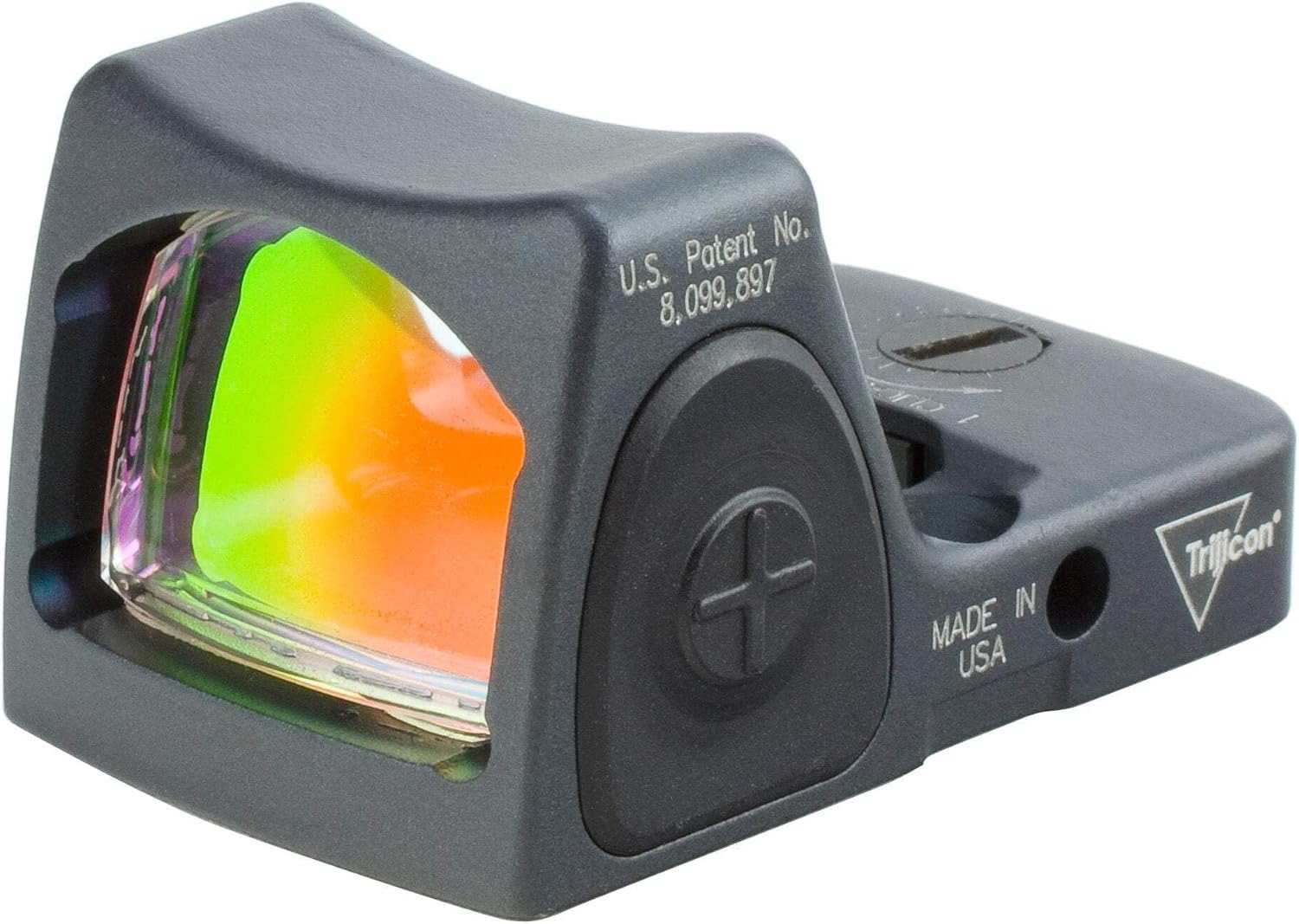
The Trijicon RMR Type 2 is still the gold standard for pistol optics when reliability matters more than anything else. Its forged housing and proven electronics make it one of the toughest reflex sights ever built.
Key Specs
- Footprint: RMR
- Dot sizes: 3.25 MOA / 6.5 MOA
- Battery: CR2032
- Battery life: ~4 years
- Weight: 1.2 oz
- Housing: Forged aluminum
Pros
- Exceptional durability
- Very stable emitter under recoil
- Reliable electronics
- Huge aftermarket support
Cons
- Bottom battery requires removal
- Window slightly smaller than newer optics
My Hands-On Notes
Mounted on a Glock 17 MOS with an RMR plate, the optic sits low enough for a usable lower-third co-witness with suppressor-height irons. Deck height is minimal, which helps maintain a natural presentation.
The lens tint is noticeable but not distracting. Trijicon uses a slightly blue coating that improves dot contrast in bright daylight.
Parallax shift is minimal inside defensive pistol distances. During rapid double-taps, the emitter never flickered or ghosted even under aggressive recoil.
The rubber buttons remain tactile even with gloves, though they’re slightly recessed.
What People Say Online
Most professional shooters still consider the RMR the benchmark for durability. Forum discussions often highlight how it survives drops and thousands of rounds without losing zero.
Mounting Clarity
Direct mount for RMR-cut slides. Glock MOS requires an RMR plate.
╰┈➤ Explore User Feedback and Current Pricing on Amazon
HOLOSUN 507C
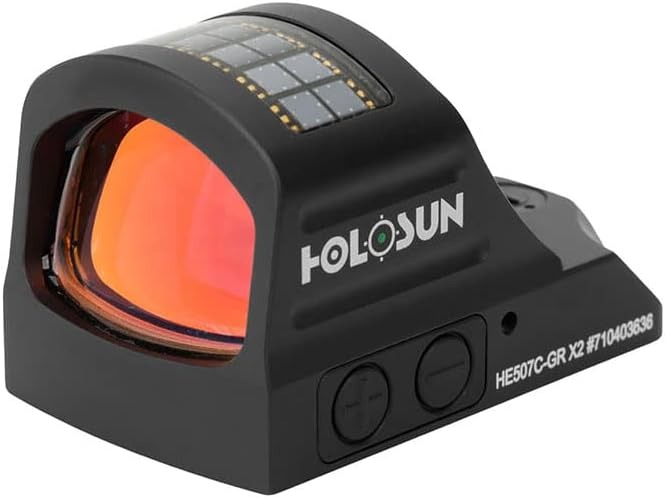
The Holosun 507C delivers an impressive feature set for the price, including multi-reticle capability, solar backup, and excellent battery life.
Key Specs
- Footprint: RMR
- Dot size: 2 MOA / 32 MOA circle
- Battery: CR1632
- Battery life: ~50,000 hours
- Solar panel backup
- Weight: 1.5 oz
Pros
- Multiple reticle options
- Long battery life
- Side battery tray
- Good window size
Cons
- Slight lens tint
- Housing less rugged than RMR
My Hands-On Notes
The 507C balances extremely well on the Glock 17 slide. The side battery tray is a huge advantage since you don’t need to remove the optic to swap batteries.
Glass clarity is surprisingly good for the price. The greenish tint is visible but doesn’t affect target acquisition.
Parallax performance is solid inside typical pistol distances. During movement drills, the reticle remained stable with minimal perceived shift.
Buttons are raised enough that you can adjust brightness easily even while wearing gloves.
What People Say Online
Many shooters on forums praise the 507C as the best value optic available. The multi-reticle system is especially popular among competition shooters.
Mounting Clarity
Uses standard RMR footprint. Compatible with most Glock MOS plates.
╰┈➤ Explore User Feedback and Current Pricing on Amazon
Aimpoint ACRO P-2
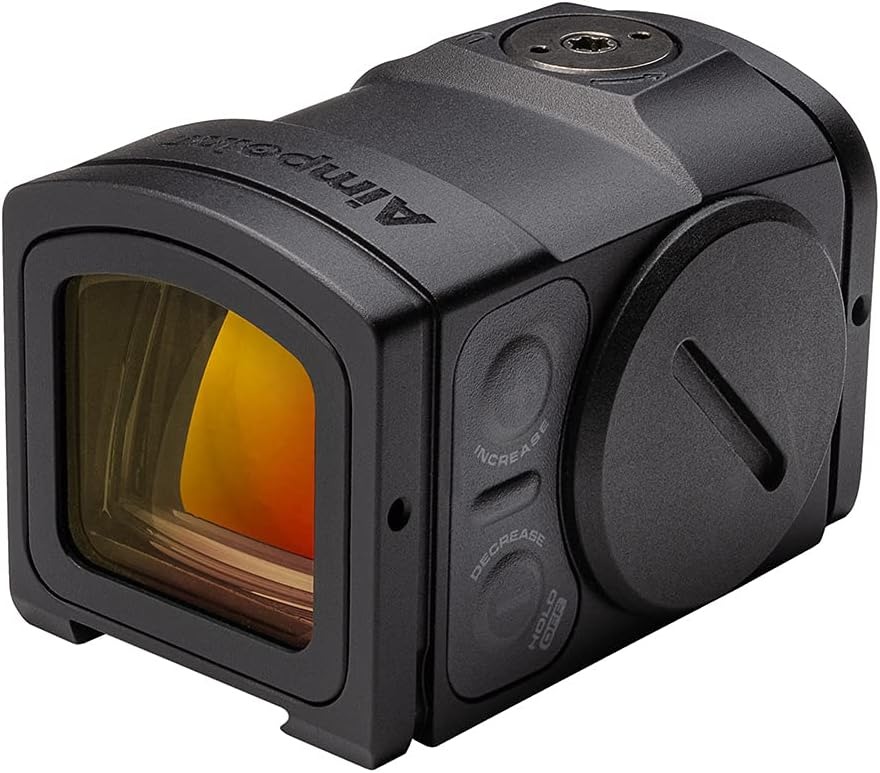
The Aimpoint ACRO P-2 introduced the fully enclosed pistol optic concept that many agencies now prefer for duty use.
Key Specs
- Footprint: ACRO
- Dot size: 3.5 MOA
- Battery: CR2032
- Battery life: 50,000 hours
- Fully enclosed emitter
- Weight: 2.1 oz
Pros
- Completely sealed emitter
- Outstanding durability
- Extremely long battery life
- Excellent brightness range
Cons
- Larger profile than open optics
- Requires ACRO mounting plate
My Hands-On Notes
The enclosed emitter design eliminates one of the biggest weaknesses of open reflex optics—dust or moisture blocking the emitter.
On the Glock 17 MOS, it requires a dedicated ACRO plate, which slightly increases deck height but still allows co-witness with suppressor-height irons.
The glass is very clear with almost no tint. Dot intensity remains consistent even in harsh sunlight.
Parallax is extremely well controlled. During lateral movement drills, the dot remained predictable with no unusual distortion.
Buttons are large and easy to press with gloves.
What People Say Online
Professional instructors frequently recommend the ACRO P-2 for duty pistols due to its sealed design.
Mounting Clarity
Requires ACRO footprint plate or dedicated ACRO slide cut.
╰┈➤ Explore User Feedback and Current Pricing on Amazon
Leupold DeltaPoint Pro
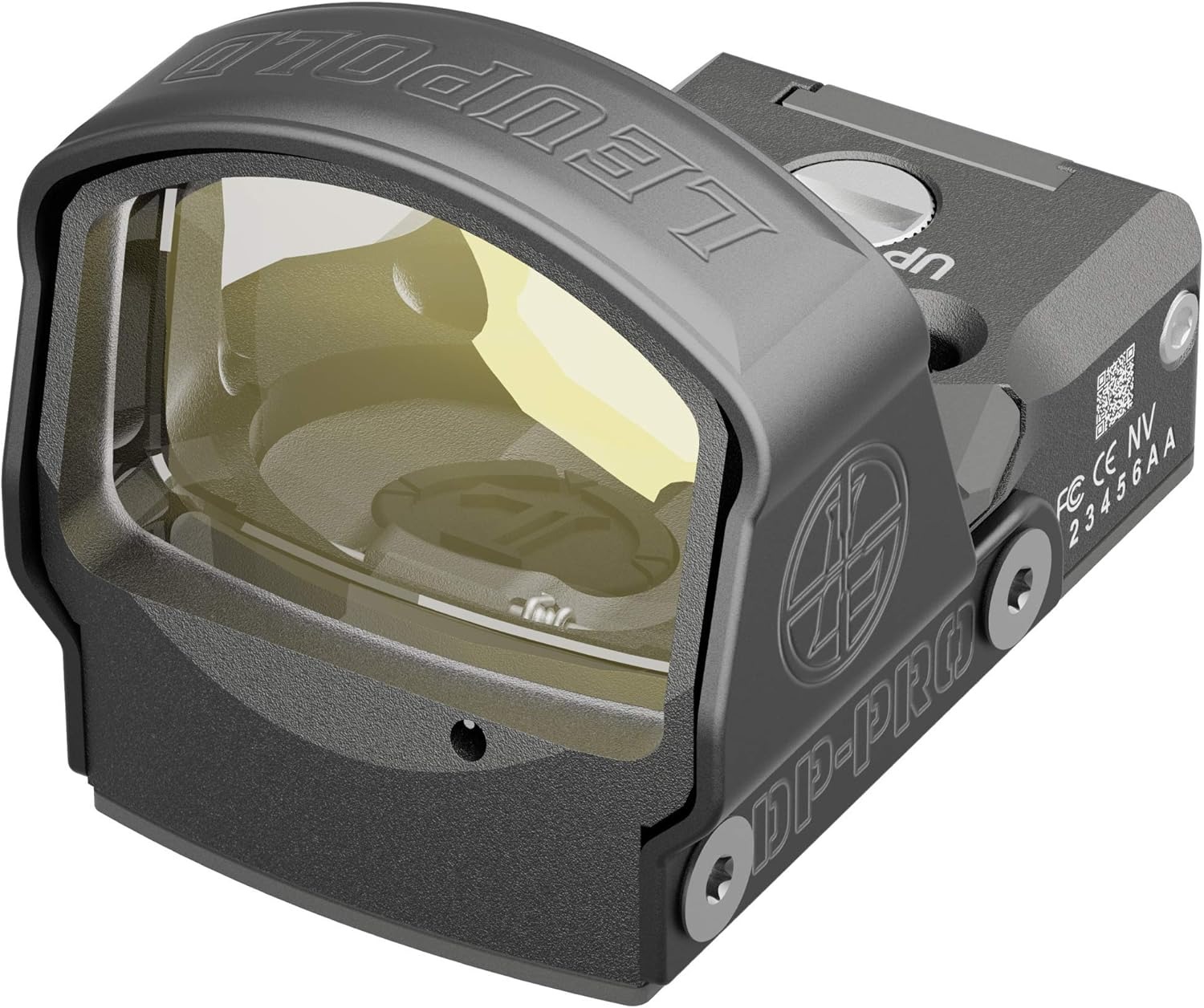
The DeltaPoint Pro is famous for its extremely large window, which makes target acquisition incredibly fast.
Key Specs
- Footprint: DeltaPoint Pro
- Dot sizes: 2.5 MOA / 6 MOA
- Battery: CR2032
- Motion sensor technology
- Weight: 1.9 oz
Pros
- Very large viewing window
- Crisp dot
- Excellent brightness control
Cons
- Higher deck height
- Requires DeltaPoint footprint
My Hands-On Notes
The wide window dramatically improves peripheral awareness when shooting quickly.
However, the optic sits slightly higher on the Glock slide, which can make co-witnessing with standard suppressor sights more difficult.
Glass quality is excellent. The lens coatings minimize glare without introducing heavy tint.
Parallax shift is minimal. Even when intentionally placing the dot at the edges of the window, point of impact remained predictable.
What People Say Online
Competition shooters frequently favor the DeltaPoint Pro because the large window helps with fast transitions between targets.
Mounting Clarity
Requires DeltaPoint plate for Glock MOS.
╰┈➤ Explore User Feedback and Current Pricing on Amazon
Steiner MPS
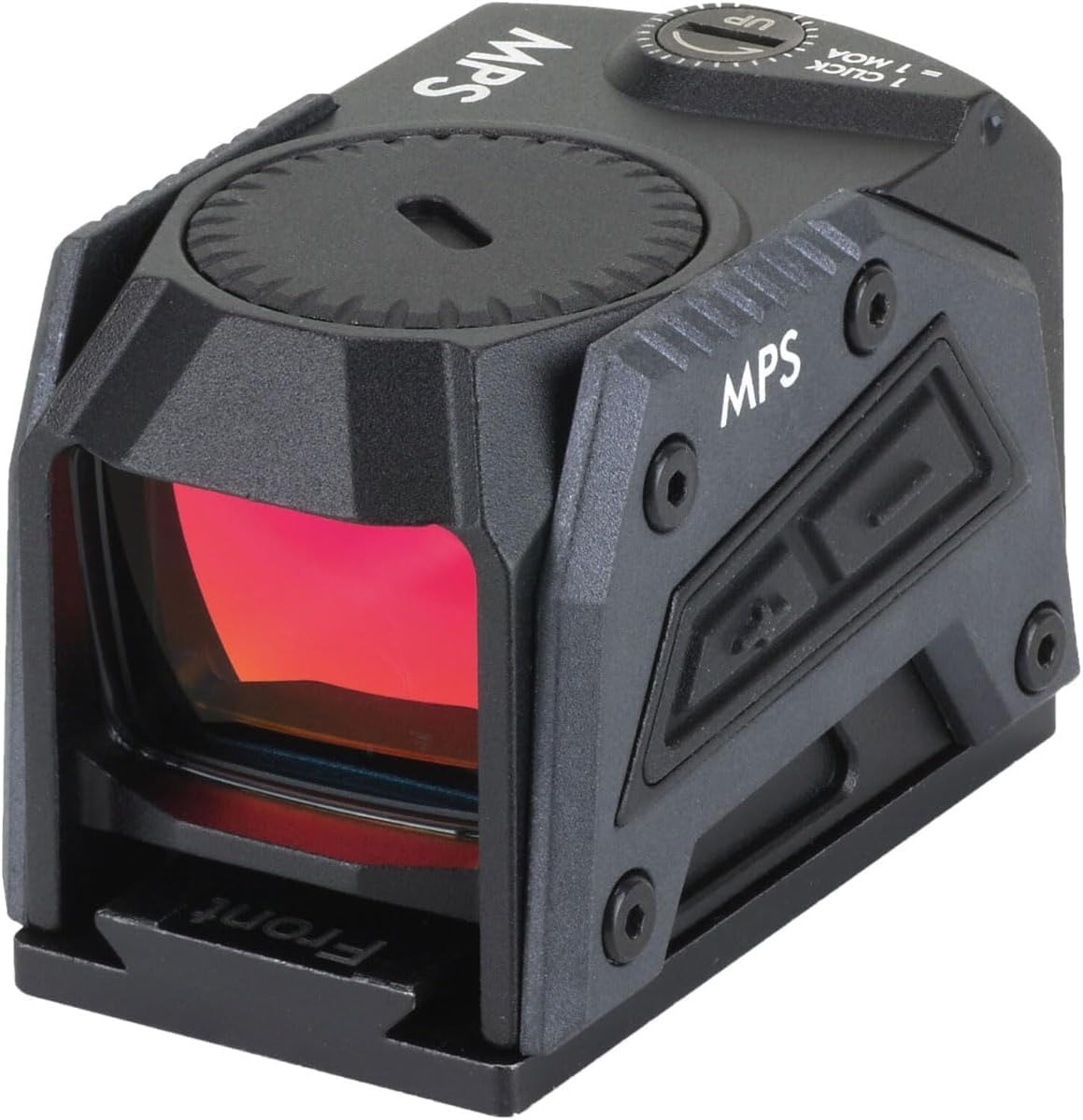
The Steiner MPS is a rugged enclosed pistol optic designed specifically for law enforcement duty pistols.
Key Specs
- Footprint: ACRO
- Dot size: 3.3 MOA
- Battery: CR1632
- Fully enclosed emitter
- Aluminum housing
Pros
- Extremely durable
- Enclosed emitter
- Clear glass
Cons
- Slightly bulky
- Limited aftermarket mounting options
My Hands-On Notes
The MPS feels extremely solid on the Glock slide. The enclosed design prevents emitter occlusion from debris or water.
Lens clarity is impressive with minimal distortion.
Parallax shift is nearly nonexistent inside realistic handgun distances.
Buttons are large and responsive even with gloves.
What People Say Online
Many duty-use shooters compare it directly with the ACRO P-2 and consider it a slightly more affordable alternative.
Mounting Clarity
Uses ACRO mounting pattern.
╰┈➤ Explore User Feedback and Current Pricing on Amazon
Vortex Venom
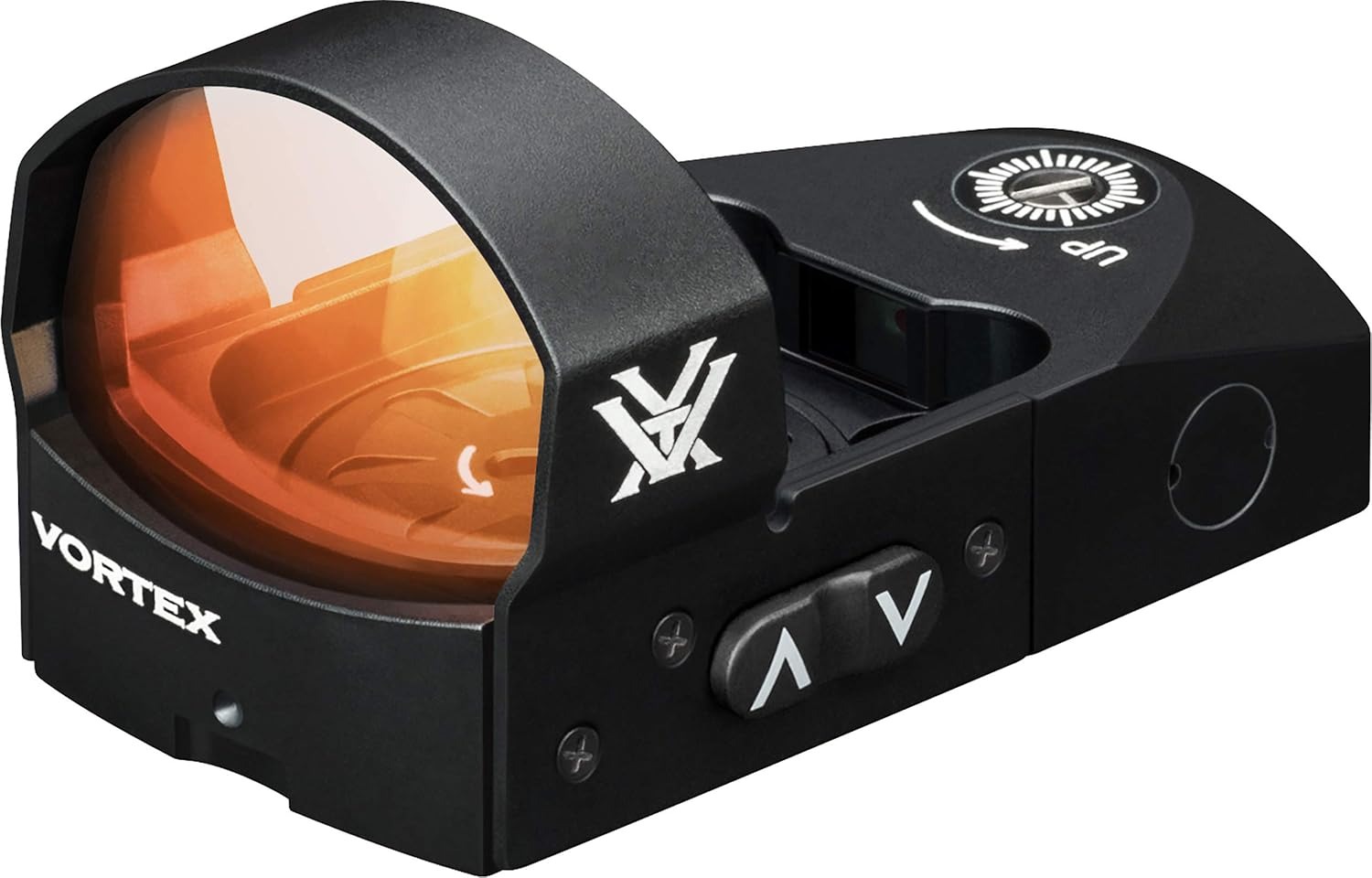
The Vortex Venom is one of the most affordable ways to get into pistol red dots.
Key Specs
- Footprint: Venom
- Dot size: 3 MOA
- Battery: CR1632
- Battery life: ~30,000 hours
- Weight: 1.1 oz
Pros
- Very affordable
- Top-load battery
- Lightweight
Cons
- Not as durable as duty optics
- Auto brightness can be inconsistent
My Hands-On Notes
The Venom sits relatively low on a Glock slide with the proper plate, allowing a decent co-witness.
Glass clarity is good but shows mild edge distortion.
During recoil testing, the optic maintained zero through several hundred rounds, though I wouldn’t choose it for hard duty use.
Button controls are large and easy to operate even with gloves.
What People Say Online
Many beginners start with the Venom because it’s affordable and backed by Vortex’s strong warranty.
Mounting Clarity
Requires Venom footprint plate.
╰┈➤ Explore User Feedback and Current Pricing on Amazon
Why the Best Red Dot for Glock 17 Depends on Footprint Compatibility
The Glock 17 MOS system allows several optic mounting plates, but footprint compatibility still matters a lot.
Most pistol optics use one of four patterns:
- RMR footprint – most common pistol optic pattern
- ACRO footprint – enclosed duty optics
- DeltaPoint footprint – large window optics
- Venom footprint – budget optics
Choosing an optic with a widely supported footprint ensures easier mounting and more aftermarket plates.
If you plan to upgrade slides later or swap optics, sticking with RMR or ACRO footprints gives you the most flexibility.
How I Tested / Evaluation Criteria
Parallax Performance
While pistol optics are technically parallax-free beyond certain distances, noticeable parallax shift can occur at closer ranges. I tested each optic by intentionally moving the dot to the edges of the window while maintaining a fixed target. The best optics showed minimal point-of-impact change within typical handgun distances.
Co-Witness and Deck Height
Deck height determines how high the optic sits above the slide. Lower deck heights make it easier to achieve a lower-third co-witness with suppressor sights and maintain a natural presentation during draws.
Durability
I evaluated housing strength, sealing quality, and how well each optic handled repeated recoil cycles. Optics designed for duty pistols should withstand thousands of rounds without losing zero.
Battery System
Battery life and replacement design matter more than most people realize. Side-loading trays are ideal because they allow battery swaps without removing the optic and risking zero shift.
Brightness Range
Good optics must function in both bright sunlight and low-light environments. I tested maximum brightness outdoors and lowest settings indoors to evaluate the usable range.
Glass Quality
Lens coatings, tint, and distortion all affect how quickly you acquire the dot. Clear glass with minimal tint helps maintain natural target visibility.
Controls Ergonomics
Brightness buttons must remain usable with gloves or wet hands. Some optics hide buttons too deeply, making adjustments difficult under stress.
Mounting Ecosystem
Optics with popular footprints offer more mounting plates, slide cuts, and aftermarket support. This matters when upgrading pistols later.
How to Choose the Right Red Dot for This Gun
The Glock 17 is a full-size pistol, which gives you more flexibility when choosing optics compared to compact handguns. Larger slides can support larger windows and heavier optics without compromising balance.
The first factor I recommend considering is footprint compatibility. If your Glock 17 uses the MOS system, you'll need a mounting plate that matches your optic footprint. RMR and ACRO patterns are the most widely supported.
Second, think about window size. Larger windows make it easier to acquire the dot quickly during rapid draws or movement drills. This is why optics like the DeltaPoint Pro and SRO are popular among competition shooters.
Third, evaluate emitter design. Open emitter optics are lighter and often cheaper, but debris or water can block the emitter. Enclosed optics like the ACRO P-2 eliminate that risk.
Fourth, consider battery access. Optics with side-loading trays are far easier to maintain because you don’t need to remove the optic from the slide.
Fifth, think about intended use. Duty pistols demand maximum durability, while range guns or competition setups may prioritize larger windows and lighter weight.
Finally, consider co-witness capability. Proper iron sight alignment ensures your pistol remains usable if the optic fails.
FAQs
Are red dots worth it on a Glock 17?
Yes. A quality optic can dramatically improve target acquisition speed and accuracy, especially at longer handgun distances.
What footprint does Glock MOS use?
Glock MOS uses interchangeable mounting plates that allow several footprints including RMR, DeltaPoint, and ACRO.
What dot size is best for pistol shooting?
Most shooters prefer 3–4 MOA dots for defensive use because they balance speed and precision.
Do pistol red dots lose zero easily?
Quality optics maintain zero extremely well when properly mounted and torqued.
Do I need suppressor height sights?
Yes, if you want a co-witness backup in case the optic fails.
Conclusion
Choosing the Best Red Dot for Glock 17 ultimately comes down to balancing durability, window size, mounting compatibility, and battery design. For duty or defensive pistols, the Aimpoint ACRO P-2 and Trijicon RMR Type 2 remain the most proven options. Shooters looking for value and features often gravitate toward the Holosun 507C, while competitors frequently prefer the large viewing window of the DeltaPoint Pro.
Whichever optic you choose, proper mounting, regular maintenance, and consistent training will make a far bigger difference than the optic itself.