Best Red Dot for Ruger P345 is a niche topic because the P345 predates the modern optics-ready handgun era. Unlike today’s factory-cut slides, this .45 ACP pistol typically requires either a dovetail adapter plate or professional milling to mount a micro red dot. That limitation changes the optics you should consider.
I’ve spent years testing pistol optics on older platforms like the P345, 1911s, and early polymer guns. The goal here isn’t just to list specs — it’s to explain which optics actually work on legacy pistols and why. Factors like deck height, RMR footprint compatibility, window size, emitter protection, and recoil durability matter far more when the mounting ecosystem is limited.
Below are six optics that balance reliability, mounting flexibility, and performance on a full-size .45 pistol like the Ruger P345.
Top Product List: Best Red Dot for Ruger P345
- Trijicon RMR Type 2
- HOLOSUN 507C
- Burris FastFire 3
- Vortex Venom
- Leupold Deltapoint Pro
- Primary Arms SLX RS-10
Trijicon RMR Type 2
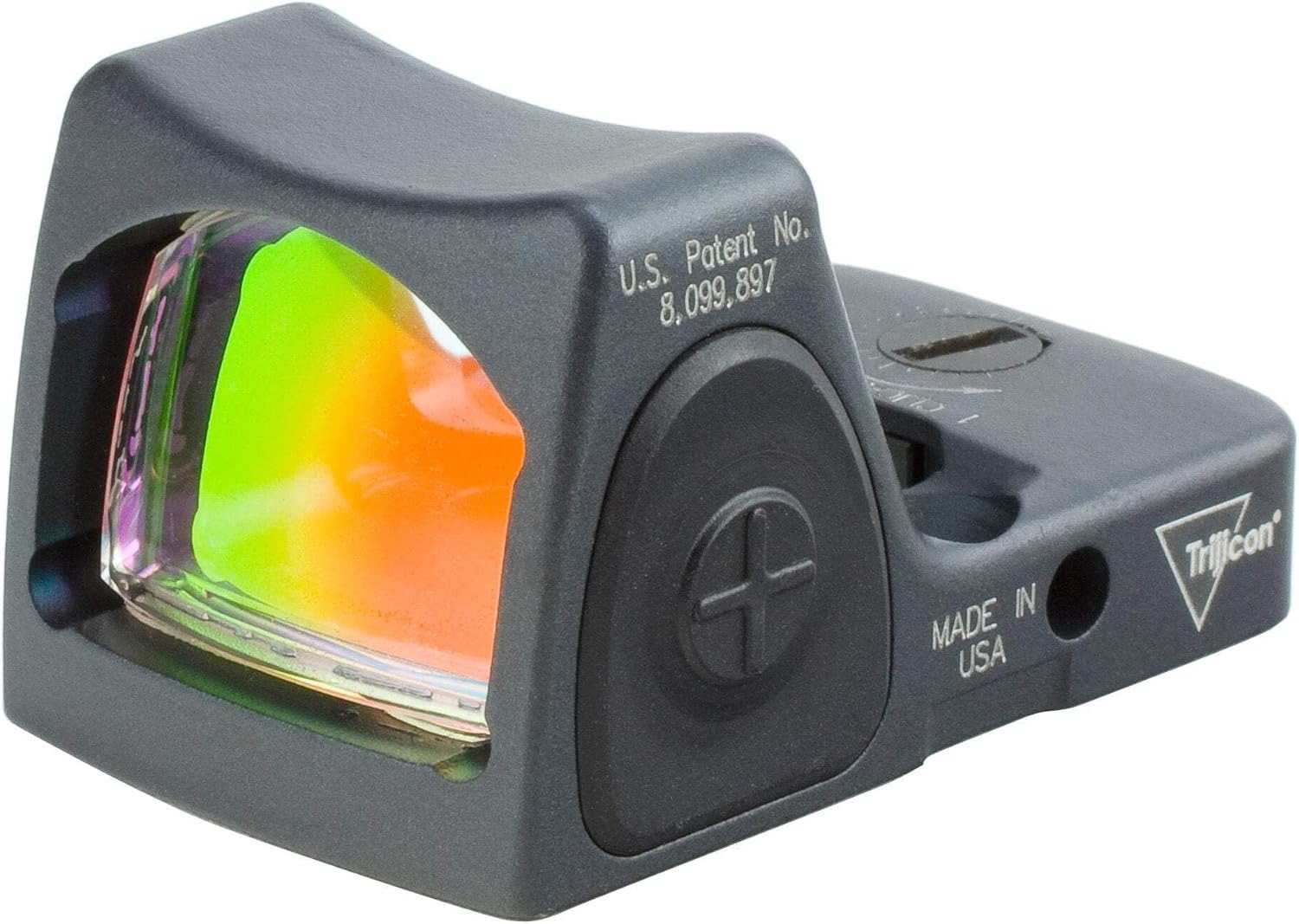
The Trijicon RMR Type 2 remains one of the most battle-proven pistol red dots ever built. If you’re mounting an optic on a heavy-recoiling .45 ACP like the P345, this is the standard many others are measured against.
Key Specs
- Footprint: RMR
- Dot sizes: 3.25 MOA / 6.5 MOA
- Battery: CR2032 (bottom load)
- Housing: Forged aluminum
- Waterproof: 20 m
Pros
- Extremely durable housing design
- Proven reliability under heavy recoil
- Large aftermarket mounting ecosystem
- Crisp emitter with minimal starburst
Cons
- Battery requires optic removal
- Slight blue lens tint
- Expensive compared to competitors
My hands-on notes
When mounted via an RMR adapter plate on older pistols, the RMR’s deck height sits slightly higher than modern direct-milled optics. On the P345 that typically means no true co-witness, though suppressor sights can help.
Parallax shift is minimal inside defensive distances. At 10–15 yards the dot stays centered even with imperfect head position. The emitter sits deeply recessed, which reduces occlusion from lint or carbon.
Button controls are tactile enough to operate with gloves, something many open-emitter optics struggle with.
What people say online
Across forums and Reddit discussions, the RMR consistently gets praised for surviving slide impacts, drop tests, and high round counts. Many shooters mention running 20,000+ rounds without losing zero.
Mounting clarity
The P345 requires a dovetail mount or slide milling for the RMR footprint. Because the RMR footprint has become the industry standard, plate availability is excellent.
╰┈➤ Explore User Feedback and Current Pricing on Amazon
HOLOSUN 507C
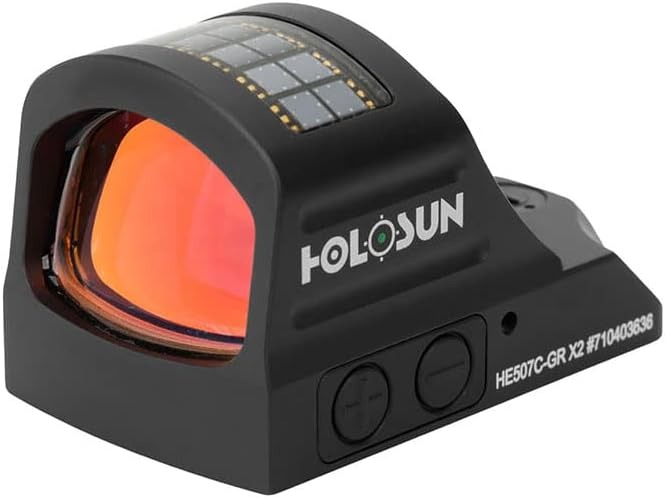
The Holosun 507C is one of the most feature-rich pistol optics available and a popular alternative to the RMR footprint ecosystem.
Key Specs
- Footprint: RMR
- Reticle: 2 MOA dot / 32 MOA circle
- Battery: CR1632
- Solar backup: Yes
- Brightness settings: 10 daylight + 2 NV
Pros
- Multiple reticle system
- Side-loading battery tray
- Excellent battery life (~50k hours)
- Large window for rapid acquisition
Cons
- Slightly bulkier housing
- Glass tint more noticeable than premium optics
My hands-on notes
Holosun’s emitter sits slightly forward, which can occasionally collect carbon on pistols with aggressive ejection patterns. On the P345 this hasn’t been a major issue but it’s worth noting.
Parallax is well controlled — similar to the RMR within typical handgun distances. The window is noticeably larger than older reflex sights, which helps when presenting the pistol quickly.
The side battery tray is a major usability advantage. You can change batteries without removing the optic and losing zero.
Controls are rubberized buttons on the side, and they’re easy to manipulate even with gloves.
What people say online
Shooters frequently praise the circle-dot reticle for fast acquisition in defensive shooting. On forums, the 507C is often recommended as the best value optic using the RMR footprint.
Mounting clarity
Because it uses the RMR footprint, mounting options are identical to the Trijicon RMR — dovetail plates or slide milling.
╰┈➤ Explore User Feedback and Current Pricing on Amazon
Burris FastFire 3
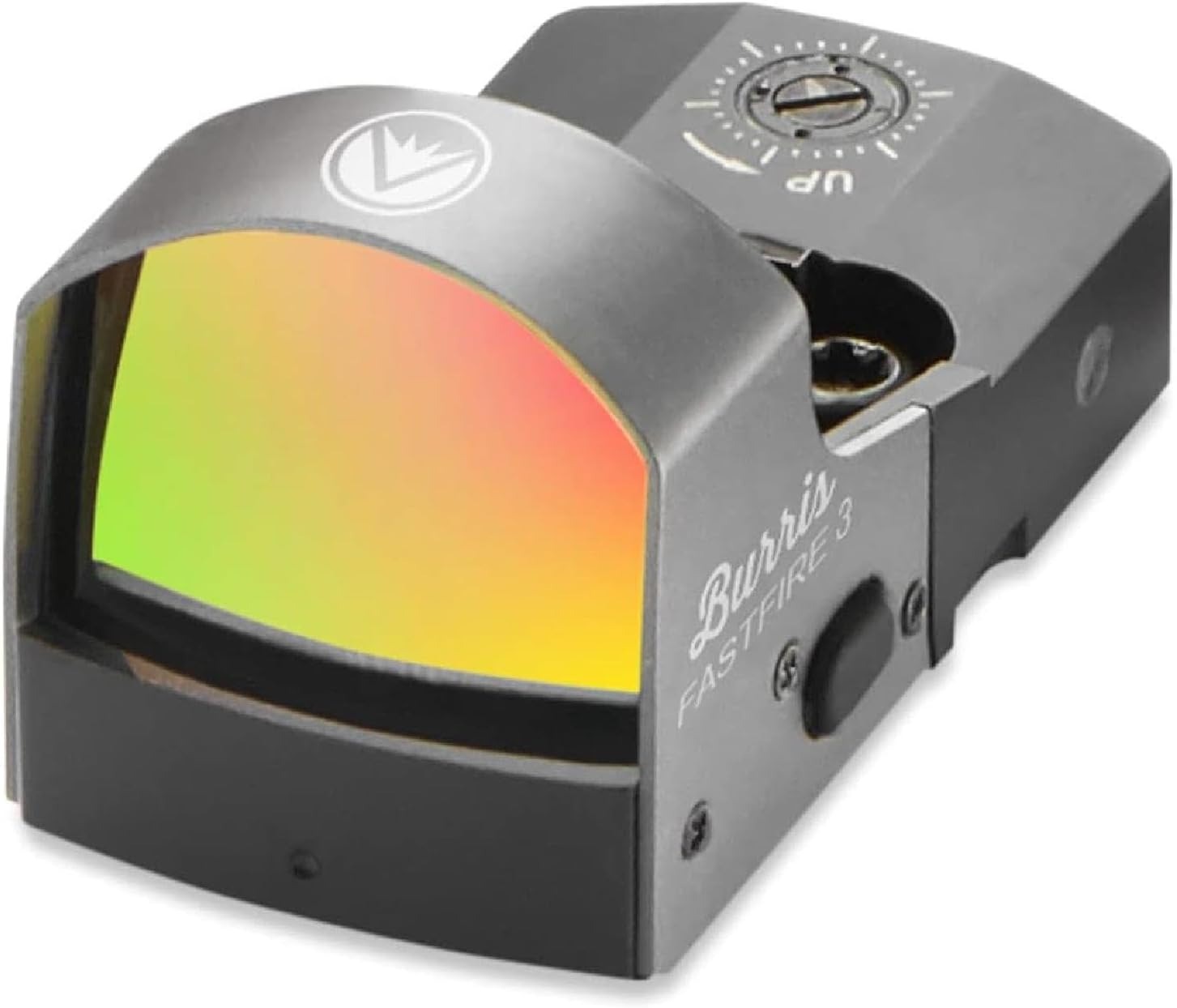
The Burris FastFire 3 is one of the earliest widely adopted pistol red dots and remains a lightweight, affordable option.
Key Specs
- Footprint: FastFire / Docter pattern
- Dot sizes: 3 MOA / 8 MOA
- Battery: CR1632
- Weight: 0.9 oz
- Brightness: automatic + manual
Pros
- Extremely lightweight
- Affordable entry price
- Top-loading battery
- Large dot option for fast shooting
Cons
- Open emitter design vulnerable to debris
- Housing less rugged than duty optics
My hands-on notes
The FastFire’s window is fairly generous considering its small size. However, the lens coatings produce noticeable blue tint, which can slightly reduce clarity in low light.
The auto-brightness sensor works decently, though manual adjustment gives better results for defensive carry.
Parallax shift becomes slightly more noticeable past 20 yards compared with premium optics. That said, inside normal pistol ranges it performs well.
Buttons are small but still usable with gloves.
What people say online
Many shooters appreciate how lightweight it is. Hunters often run FastFire optics on pistols and shotguns due to the simple interface and minimal weight.
Mounting clarity
Because it uses the Docter/FastFire footprint, you’ll need a compatible adapter plate for the P345 slide.
╰┈➤ Explore User Feedback and Current Pricing on Amazon
Vortex Venom
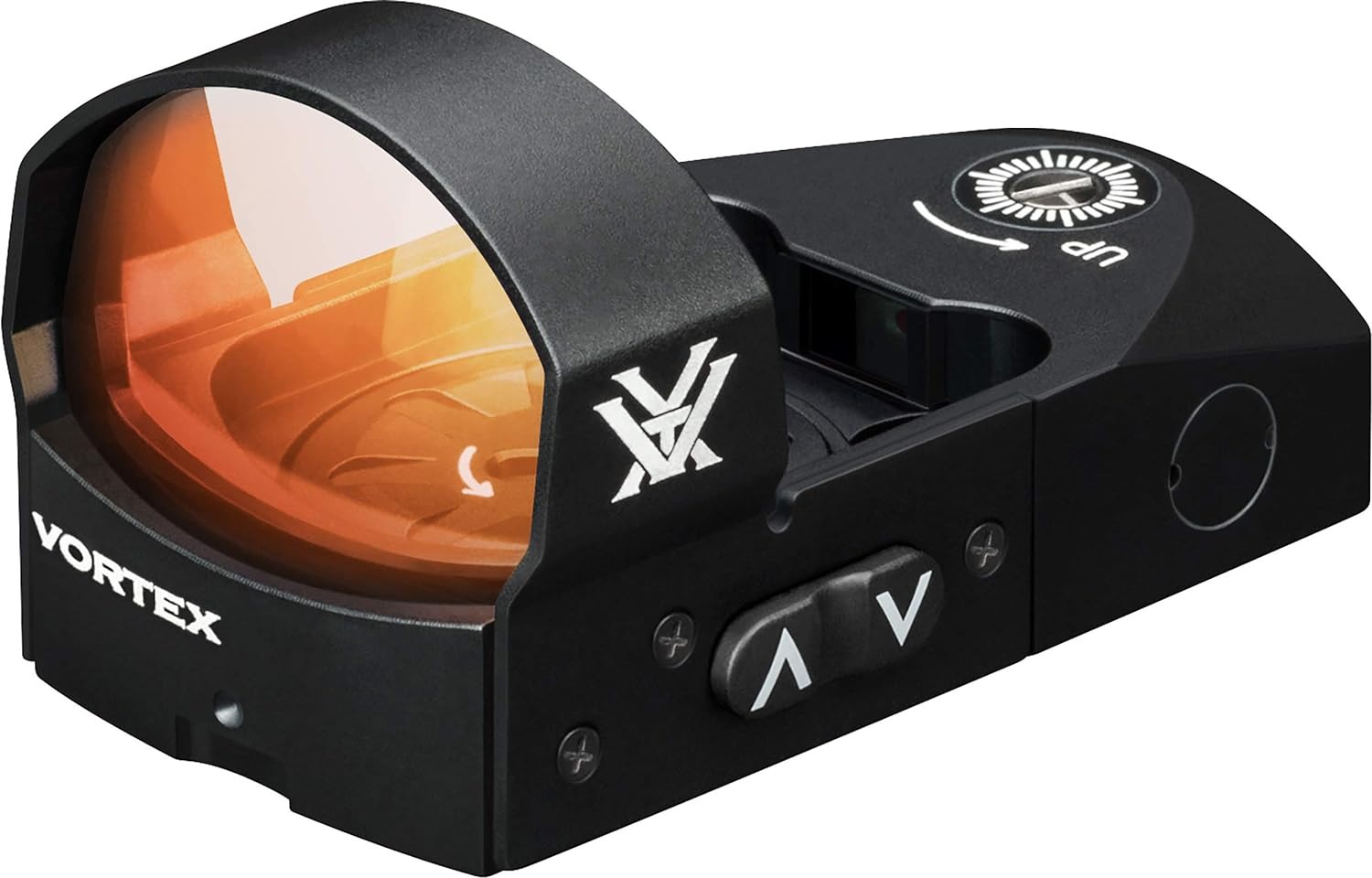
The Vortex Venom is a versatile reflex sight with a large window and strong warranty support.
Key Specs
- Footprint: Docter pattern
- Dot size: 3 MOA or 6 MOA
- Battery: CR1632 top load
- Weight: 1.1 oz
- Brightness levels: 10
Pros
- Excellent glass clarity
- Top-loading battery
- Large viewing window
- Lifetime warranty
Cons
- Housing not as rugged as RMR
- Slight distortion near lens edges
My hands-on notes
One of the first things I noticed about the Venom is the clear glass with minimal tint. Compared with older reflex optics, target visibility is noticeably better.
The larger window helps with rapid sight acquisition — especially useful on a wide-grip pistol like the P345.
Parallax control is solid within 15 yards but becomes slightly more noticeable beyond that distance.
Buttons are positioned on top and have decent tactile feedback. They’re easy to operate with gloves, though they can be accidentally pressed during slide manipulation.
What people say online
The Venom gets strong feedback from shooters who prioritize the Vortex lifetime warranty. Many consider it one of the safest purchases in its price range.
Mounting clarity
It shares the same footprint as the FastFire, meaning Docter pattern adapter plates are required.
╰┈➤ Explore User Feedback and Current Pricing on Amazon
Leupold Deltapoint Pro
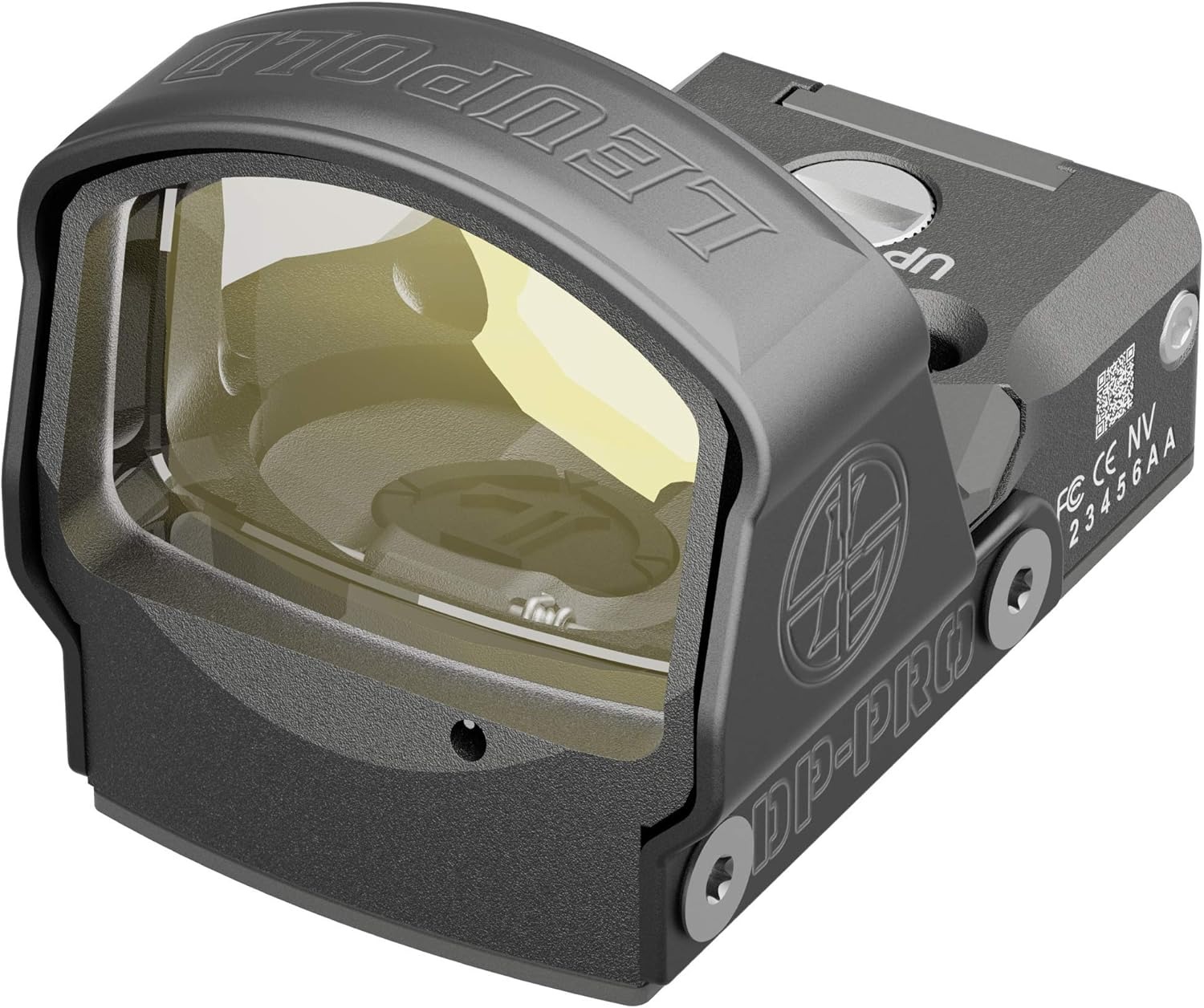
The DeltaPoint Pro is widely regarded as one of the fastest pistol optics due to its extremely large window.
Key Specs
- Footprint: DPP
- Dot sizes: 2.5 MOA / 6 MOA
- Battery: CR2032 top load
- Housing: Aluminum
- Night-vision compatibility: Yes
Pros
- Massive viewing window
- Excellent lens coatings
- Very durable housing
- Top-loading battery
Cons
- Expensive
- Larger profile than most pistol optics
My hands-on notes
The window size is the biggest advantage here. When presenting the pistol quickly, the dot appears almost instantly.
Lens coatings are among the clearest I’ve tested — nearly neutral color with minimal distortion.
Parallax performance is excellent, and the emitter sits deeply enough that debris rarely interferes with the dot.
Controls consist of a single top button that cycles brightness levels. It’s simple but effective, though less customizable than Holosun optics.
What people say online
Competitive shooters often favor the DeltaPoint Pro because the window size makes tracking the dot during recoil easier.
Mounting clarity
Because it uses the DPP footprint, mounting plates are less common than RMR plates but still widely available.
╰┈➤ Explore User Feedback and Current Pricing on Amazon
Primary Arms SLX RS-10
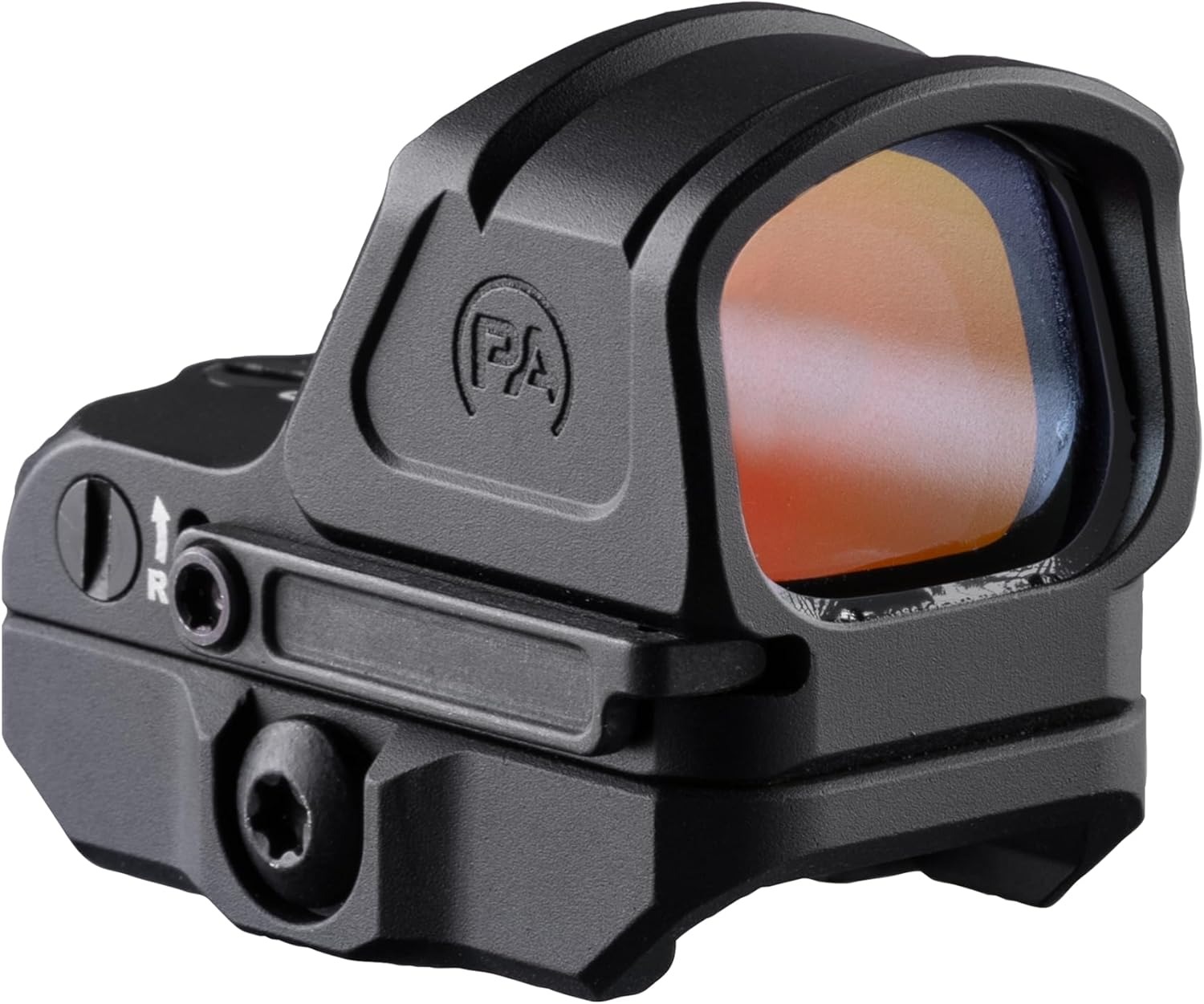
The Primary Arms SLX RS-10 is a newer pistol optic designed to deliver modern features at a budget price.
Key Specs
- Footprint: RMR
- Dot size: 3 MOA
- Battery: CR1632 side load
- Brightness levels: 12
- Weight: 1 oz
Pros
- Affordable RMR-footprint optic
- Side battery tray
- Clear glass for the price
- Good button ergonomics
Cons
- Not as rugged as duty optics
- Smaller window than DPP
My hands-on notes
The RS-10 has surprisingly good glass for its price point. The tint is slightly warm but not distracting.
The emitter sits fairly exposed, so carbon buildup is possible on pistols with heavy recoil impulse. Fortunately, cleaning the lens is quick.
Parallax shift is comparable to mid-range optics like the 507C. Within defensive ranges it remains very manageable.
Buttons are large and easy to feel even with gloves, which is something many budget optics struggle with.
What people say online
Many shooters consider the RS-10 one of the best entry-level RMR-pattern optics thanks to its reliability and low price.
Mounting clarity
Since it uses the RMR footprint, the same adapter plates used for RMR and 507C optics will work.
╰┈➤ Explore User Feedback and Current Pricing on Amazon
How I Tested and Evaluated These Optics
Parallax
Parallax matters more on pistol optics than many shooters realize. When shooting quickly with imperfect head alignment, excessive parallax can shift point of impact. I tested each optic at 5, 10, and 25 yards while intentionally moving my head behind the window to observe dot movement relative to the target.
Co-Witness and Deck Height
Because the Ruger P345 typically uses adapter plates rather than direct milling, deck height becomes important. Higher deck height can eliminate co-witness with factory irons. I evaluated whether suppressor sights or standard sights could still provide partial backup alignment.
Durability
Each optic’s housing design and recoil rating were considered carefully. The P345 fires .45 ACP, which produces a heavier slide impulse than many 9mm pistols. Optics with fragile housings or exposed emitters can struggle under long-term recoil.
Battery System
Battery accessibility matters for real-world use. I looked at battery location, expected runtime, and whether battery replacement requires removing the optic, which can cause loss of zero.
Brightness Range
A good optic must function in both bright daylight and low-light environments. I tested brightness visibility outdoors, indoors, and against white and dark backgrounds.
Glass Quality
Lens coatings affect clarity, tint, and distortion. I compared how each optic handled glare, edge distortion, and color fidelity.
Controls and Ergonomics
Small buttons can be difficult to operate under stress or with gloves. I evaluated tactile feedback, button placement, and ease of adjustment.
Mounting Ecosystem
The P345’s lack of factory optics cuts means mounting flexibility is critical. Optics using the RMR footprint generally provide the most adapter options.
How to Choose the Right Red Dot for This Gun
Selecting a pistol optic for the Ruger P345 requires a slightly different mindset than choosing one for a modern optics-ready handgun.
First, consider mounting compatibility. Because the P345 does not have a factory optics cut, you’ll likely rely on a dovetail mount or custom slide milling. Dovetail mounts are simpler but often raise the optic higher above the bore, which can affect sight alignment and concealment. Milling the slide provides the most stable mounting platform but requires professional gunsmith work.
Second, think about footprint standards. The RMR footprint has become the most widely supported pattern in the industry. If you want maximum flexibility when selecting adapter plates or future optics upgrades, choosing an RMR-pattern sight is usually the safest route.
Third, evaluate window size versus durability. Larger windows like the DeltaPoint Pro make dot acquisition faster, especially on full-size pistols. However, compact optics with thicker housings — such as the RMR — often provide superior durability.
Fourth, pay attention to battery access. Bottom-loading batteries require removing the optic during replacement, which means you may need to re-zero afterward. Side-loading or top-loading battery systems are far more convenient.
Another factor is lens tint and glass clarity. Some optics use coatings that produce a noticeable blue tint. While this improves emitter efficiency, it can slightly reduce target clarity in certain lighting conditions.
Finally, consider recoil durability. The .45 ACP cartridge produces more slide mass and impulse than most 9mm pistols. Optics with weak housings or poorly secured lenses can eventually lose zero or fail.
Choosing the right optic ultimately comes down to balancing mounting compatibility, durability, and window visibility. A well-matched optic will make the P345 faster and easier to shoot without compromising reliability.
Frequently Asked Questions
Can the Ruger P345 be milled for a red dot?
Yes. A gunsmith can mill the slide to accept common footprints such as RMR or DeltaPoint Pro. Milling provides a lower deck height and more secure mounting than adapter plates.
Do I need suppressor sights for a red dot?
Not necessarily. With many adapter plates the optic sits high enough that standard iron sights will not co-witness. Some shooters add suppressor-height sights for backup aiming.
Are open emitter optics reliable for pistols?
Yes, but they require occasional cleaning. Carbon buildup or lint can block the emitter. Closed emitter optics eliminate this issue but are less common for pistol mounting.
What dot size works best for .45 ACP pistols?
Most shooters prefer 3–6 MOA dots. Larger dots are easier to acquire quickly, especially during recoil.
Will a red dot improve accuracy?
For many shooters, yes. Red dots allow you to focus on the target while aligning the dot rather than shifting focus between front sight and target.
Conclusion
Choosing the Best Red Dot for Ruger P345 requires balancing mounting compatibility, durability, and usability on an older pistol platform. Since the P345 lacks a factory optics cut, optics that support widely available footprints — particularly the RMR pattern — offer the most flexibility.
For maximum durability, the Trijicon RMR Type 2 remains the benchmark. If you want modern features and excellent value, the Holosun 507C is extremely compelling. Shooters prioritizing window size should strongly consider the Leupold DeltaPoint Pro.
With the right mounting solution and a reliable optic, the P345 can benefit from the same fast target acquisition and improved shooting efficiency that modern optics-ready pistols enjoy.